Agenda-setting intelligence, analysis and advice for the global fashion community.
Agenda-setting intelligence, analysis and advice for the global fashion community.
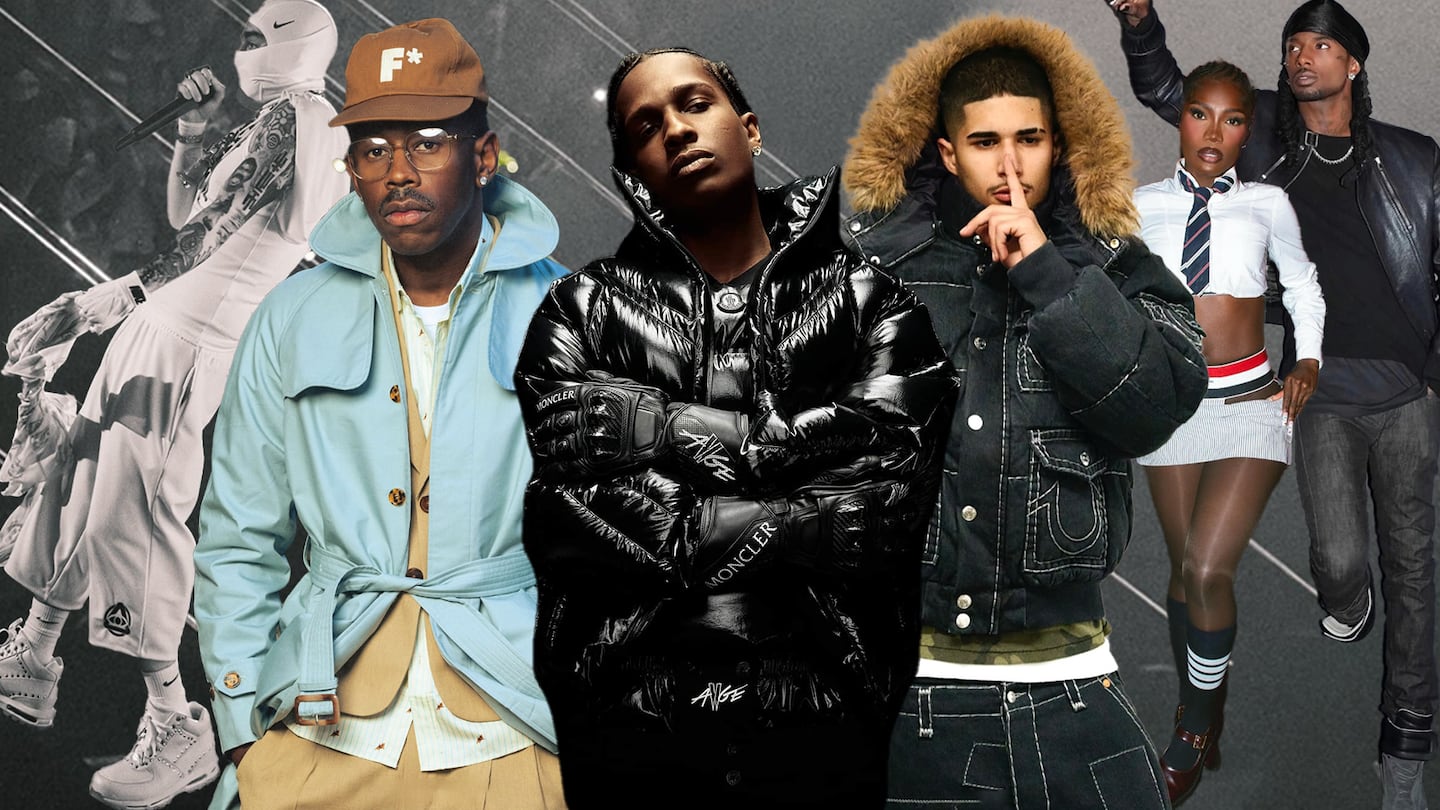
It took 10 years for A$AP Rocky to reclaim his spot at the top of the Billboard album charts with the release earlier this month of “Don’t Be Dumb,” his long-delayed fourth studio album.
As far as fashion’s concerned, he never left.
Despite only intermittently releasing music in recent years, A$AP Rocky has consistently been one of the industry’s most frequent collaborators. He’s served as the face of Dior Homme and Gucci fragrance, starred in a viral Bottega Veneta campaign and is Chanel’s latest ambassador. He’s released Vans shoes with the teen mall retailer PacSun and a capsule collection with Marine Serre.
With the new album, the Rocky brand has shifted into overdrive. Fans can buy A$AP Rocky Ray-Ban sunglasses, Moncler puffer coats and Puma sneakers, plus official “Don’t Be Dumb” merch from Quince, all either timed to the release, or conveniently hitting the market in the months leading up to it.
ADVERTISEMENT
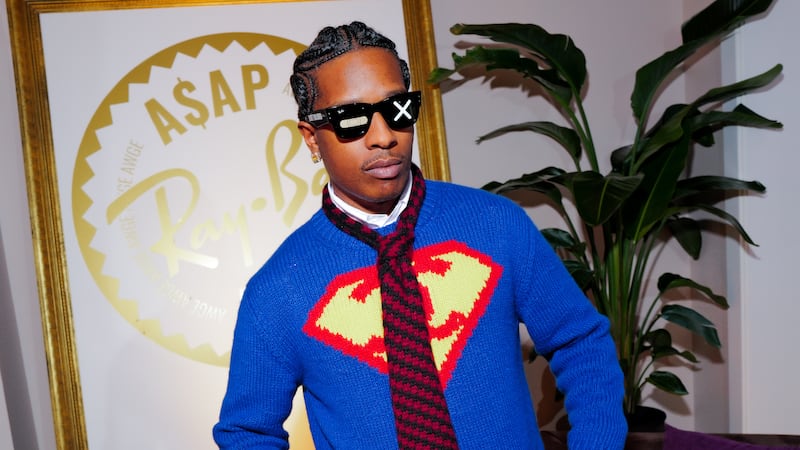
Of course, fashion industry partnerships are not what define a hip-hop artist’s relevance or influence across culture at large. Long before he was a global fashion ambassador, Rocky cemented his status as a fashion icon who reinterpreted the swagger of Harlem legends like Cam’ron—style pioneers within the genre who didn’t receive the mainstream fashion credit they deserved. But brands will inevitably return again and again to a celebrity with a distinct aesthetic and proven sway over their fans. But in the world of hip-hop, there’s a question of whether the industry is so focused on the marquee names – a group heavy on artists like Pharrell Williams and Travis Scott who became superstars in the 2010s or earlier – that a new generation is struggling to break through.
It’s a marketing challenge, particularly in a time when Gen Z is becoming disengaged with luxury. While brands need to platform the genre’s reigning legends to reach a mass audience, they also need to consider who’s following in their footsteps to capture the next generation’s attention, too. Otherwise, they risk allowing one of their most important pipelines into pop culture to stagnate.
“People are going to eventually wake up and realise they’re just recycling the same faces they’re trying to sell to us,” said Marcus Dane, co-host of the Ghetto Runways fashion podcast, which seeks to spotlight unsung voices that drive culture within the fashion industry.
The search for new names is already underway. Within the past year, Nike partnered with rappers such as Central Cee, Yeat and Lil Yachty on collaborations — the latter released a Nike sneaker Complex dubbed one of the best of 2025. Luxury brands such as Miu Miu and Gucci jumped at the opportunity to dress the 18-year-old rapper Nettspend. Doechii, who last year became the third woman to win a Grammy for best rap album, has maintained a front-row presence at fashion weeks while also creating viral marketing moments with labels such as Thom Browne.

Landing on the right new talent is harder than it used to be. Music charts aren’t much help anymore: in October, the genre was absent from the top 40 for the first time since 1990. Yet, R&B/hip-hop continues to be the most popular music genre within the US — representing one in four streams in 2025, according to analytics firm Luminate.
At the same time, the rewards are in some ways bigger than ever. According to Launchmetrics, the total media impact value generated within 10-days for a single T-shirt that Supreme made in collaboration with Playboi Carti was $2.5 million, which rivals the $2.3 million generated within a month by A$AP Rocky’s Moncler Genius collaboration. There are few faster paths to cultural relevance than breaking the next Rocky or Pharrell, especially when the competition is still chasing the last generation of hip-hop stars.
“In order to be a viable fashion brand in the marketplace, whether it’s streetwear or luxury, you have to demonstrate some level of cultural astuteness and awareness that isn’t necessarily on the nose and saying “Let’s go pay the biggest artist out there everything we can,” said Sara Schoch, co-head of global music brand partnerships at United Talent Agency.
The best partnerships often start with artists who are already fans of a brand before they’re getting paid to say it.
ADVERTISEMENT
Nike’s recent collaborations with the British rapper Central Cee were sparked by the rapper’s passion for Nike Tech fleece, said Nick Schonberger, senior director of relationships and culture at the brand. He wore the apparel in his earliest music videos and viral red carpet appearances. Similarly, the foundation behind its multi-year partnership with the Canadian rapper Drake stemmed from the artist embracing sportswear as his personal style and being a real fan of Toronto-based sports teams.
“It’s very easy to work within the celebrity landscape to sign, dress and activate someone as an avatar for your brand in a particular moment,” said Schonberger. “What’s different is cultivating relationships to the point of collaboration … building a rapport, which also builds a sense of opportunity at scale.”
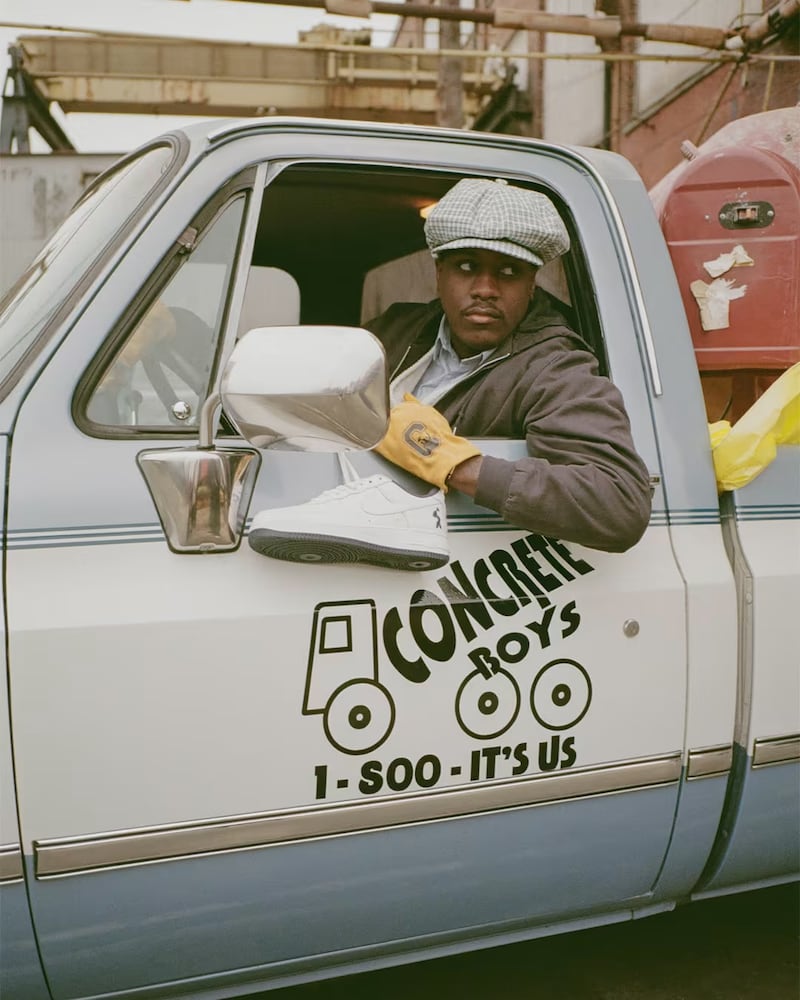
It helps if the talent is already perceived as a fashion icon by their fans, said Justin Ianda, a talent agent within the music partnerships department for Creative Artists Agency, one of the biggest talent agencies, which counts A$AP Rocky among its many clients.
Ianda singled out Lil Yachty, Playboi Carti and Ken Carson as other rappers under CAA’s roster who possess these traits.
“They have these rabid Gen Z fan bases that buy any merchandise, any product, they’re going to sell in a second,” he said, flagging a recent Skims campaign featuring Carson as an example.
That’s something that Pelle Pelle, one of the oldest clothing brands operating at the forefront of fashion’s intersection with hip-hop, recognised when it partnered with Carti last year. Like Nike, the nearly 50-year-old leather jacket maker sought a partnership with the artist after they noticed he was organically wearing the label.

“No matter how much lineage or history the brand may have, if it’s not authentic, it won’t work,” said Christian Rodriguez, Pelle Pelle’s chief brand officer. “If the storyline isn’t real, it’s very hard to fool the customer at this particular time and where we are in the marketplace.”
No one becomes A$AP Rocky overnight. Schoch believes talent with such cultural marketing power is rare and even artists who seem perfect don’t always sell. She believes that, regardless of what genre’s trending, it’s more about an artist’s own aesthetic, their relationships and how it feeds into the larger strategy of a brand.
ADVERTISEMENT
She points out that hip-hop talents with small but passionate followings could be just as powerful as a megastar. She points towards Action Bronson, a UTA-signed artist whose highest charting single reached 91 on the Billboard Hot 100, but released several popular New Balance sneaker collaborations. In December, Saucony similarly debuted a partnership with Westside Gunn, a 43-year-old fashion-obsessed rapper who’s not a mainstream icon but holds significant credibility with his listeners.
What distinguishes emerging hip-hop fashion icons more than Billboard numbers or RIAA certifications, according to Ghetto Runway’s Dane, is how confident the artist is in expressing their own personal style — even if that means hiring a stylist to bring that out.
“Playboi Carti, Rocky, Gunna, and Tyler, the Creator all tell people they can dress and put on clothes better than anyone else,” said Dane, pointing out how Kendrick Lamar’s relationship with Chanel began shortly after he elevated his wardrobe and began boasting he was the “best dressed” on songs. “You control the narrative on how you want people to see you.”
Ianda adds that brands deliberately nurture younger talents through smaller opportunities — like red carpet dressing — before moving towards larger partnerships.
And according to Schonberger, what leads to long-term partnerships like the one Nike continues to hold with artists such as Travis Scott, beyond authentic tiebacks to the brand and sports, is their consistency as influential fashion tastemakers. Sometimes, it takes younger talents longer to home in on that.
“You may be reaching someone at a different point in their career, in different points of the relationship, depending on how things click,” said Schonberger. “Sometimes, it’s a long burn into the relationship.”
While it only officially sells women’s clothing, Chanel’s partnership with the rapper is the latest instance of it doubling down on male ambassadors.
Hip-hop fueled an explosion of brands, collaborations and merchandise, but with fashion saturated with partnerships and rapper-led labels, and signs emerging that hip-hop’s cultural power could be waning, artists and their partners are finding ways to stand out.
Even as the premium denim seller lost its hold on many consumers in the 2010s, hip-hop movers and shakers never wavered in their affinity for the horseshoe logo and signature thick stitching. That’s helping the brand mount a rebound today.

Lei Takanashi is a Correspondent at The Business of Fashion (BoF). He is based in New York City and covers menswear, streetwear, young consumer trends, and the intersection between fashion and culture.
The polarising actress has become one of the most frequently tapped brand ambassadors in Hollywood. Whether she has the sway to build a lasting venture with her new lingerie line Syrn is still to be determined.
An industry that manufactures images at industrial scale and speed is forgetting how to create aspiration, writes Robert Triefus.
BoF Insights’ Brand Pulse tracking tool reveals how the industry’s top-performing contemporary and accessible luxury brands cultivated loyal online communities through sharp digital engagement strategies.
A platform historically known as a destination for visual inspiration, Pinterest has been building out its shopping and advertising features to make it easier for brands to tap the power of its ready-to-shop user base.
The embattled luxury department store is ‘absolutely dependent’ on companies like Chanel, LVMH and Kering, who could ‘suffocate’ the retailer if they stopped shipping, Reuters reported.
The polarising actress has become one of the most frequently tapped brand ambassadors in Hollywood. Whether she has the sway to build a lasting venture with her new lingerie line Syrn is still to be determined.
Fresh off a week of major moments, Tim Blanks and Imran Amed break down the blockbuster couture debuts at Dior and Chanel and what they signify about the state of the luxury industry.
Since the audit began in 2020, the Milanese fashion group found that more than a quarter of suppliers and subcontractors inspected had broken compliance rules.