Agenda-setting intelligence, analysis and advice for the global fashion community.
Agenda-setting intelligence, analysis and advice for the global fashion community.
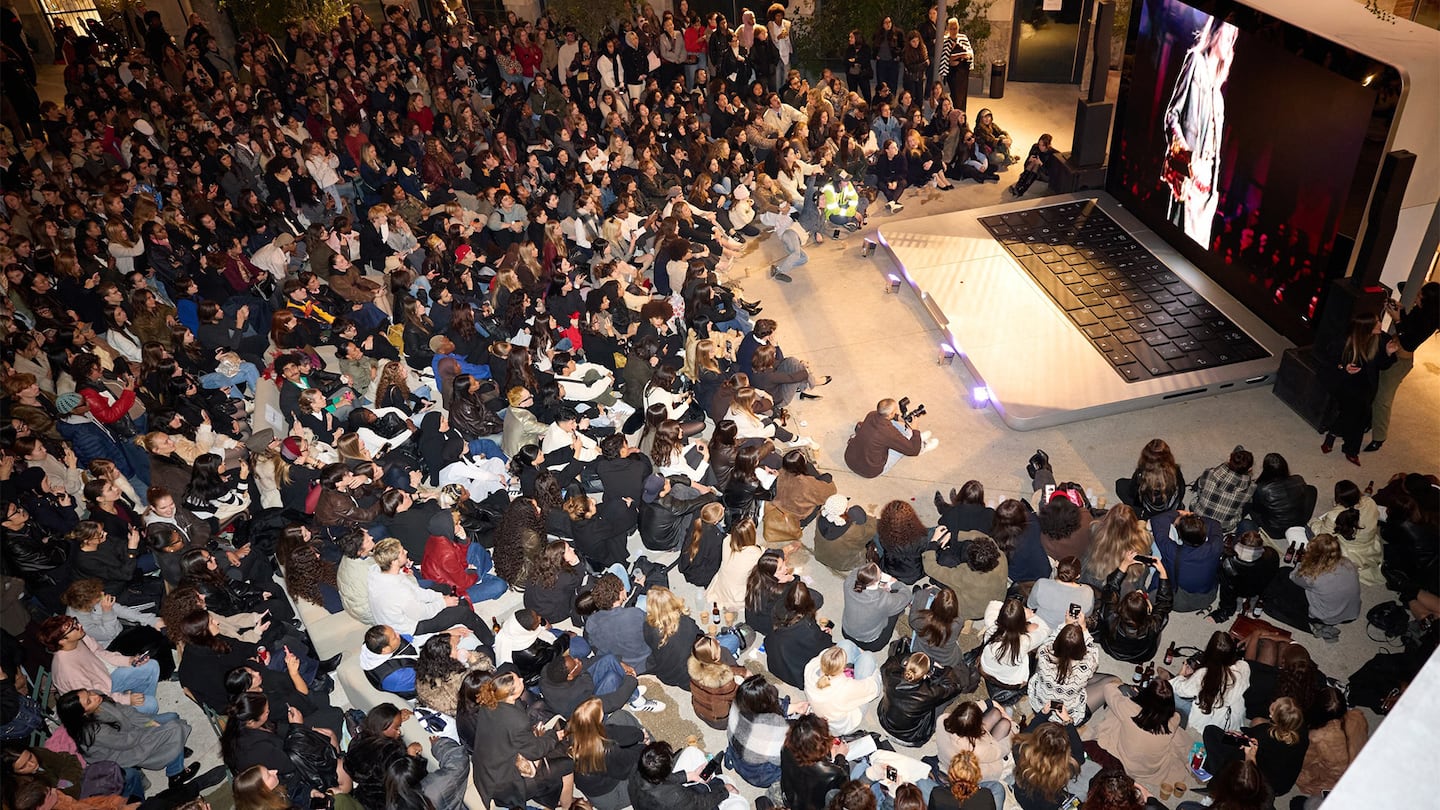
For his 526,000 Instagram followers, StyleNotCom founder Beka Gvishiani is a news source reporting on industry happenings. But Gvishiani considers himself a fan first.
“What a fan of Madonna feels when listening to her music is what I feel attending a show by Jonathan Anderson,” he said.
Fashion fans are more visible — and influential — than ever before. The Met Gala — often called fashion’s Super Bowl — garnered more engagement across social media and press than the actual American football championship last year, according to Launchmetrics.
Just like Swifties, fashion fanatics gather online in communities and comment sections on accounts like Gvishiani’s to dissect collections, magazine covers and red carpets. If the Met Gala is the Super Bowl, fashion month is the playoffs, where some people root for a particular designer to “win” Paris Fashion Week, while others “just want to see a good game,” said Tony Wang, founder of creative firm Office of Applied Strategy.
ADVERTISEMENT
Most brands welcome the attention. They’ve used runway livestreams, red carpets and marketing stunts to cultivate the sort of intense fandoms once reserved for athletes and pop stars.
Where they’ve been less successful is in getting those fans to actually buy their products.
Amid a years-long luxury slowdown, aspirational shoppers — the ones who would show up on a chilly October evening to an outdoor watch party for Matthieu Blazy’s Chanel debut — have pulled back on spending the most. Even as attention is at an all time high, the global luxury customer base has shrunk from 400 million in 2022 to 340 million last year, according to Bain.
But while surging prices and a challenging economic environment deter purchases, “there’s no barrier to entry for someone to post,” said Jenna Gottlieb, Meta’s North American fashion partnerships lead.
Still, as luxury brands look to return to growth, they’ll need to find ways to reengage with aspirational customers. And today’s fans could be tomorrow’s shoppers.
“It’s impossible to ignore fandom,” said Thom Bettridge, editor-in-chief of i-D Magazine, and writer of the newsletter Content. “If you only focus on yourself as a commodity, you can’t expect to have a cultural foothold or loyalty.”
One of fashion’s fandom breakthroughs came when millions viewed Alexander McQueen’s livestream of his Spring/Summer 2010 show, featuring the debut of Lady Gaga’s “Bad Romance,” said Nick Knight, founder of fashion film and art platform Showstudio, which hosted the stream.
“[The industry] suddenly realised that while we were used to talking to 300 journalists and buyers, there’s a whole world out there who wants to see this stuff if it’s presented in the right way,” said Knight.
ADVERTISEMENT
Fans have helped solidify fashion as an artistic medium worthy of robust critical discussion, said Knight. Brands have become full-on content factories, churning out magazines, marketing, movies and memes. By the pandemic, fashion show livestreams were the norm; Balenciaga’s Simpsons show in 2021 has nearly 30 million views on YouTube. Saint Laurent opened its own film production company in 2023, producing movies like Oscar-nominated “Emilia Pérez,” and Jonathan Anderson was costume designer for Luca Guadagnino’s “Challengers” in 2024.
Fans have contributed to success for smaller, independent brands, typically built on strong creative conviction and interest from a niche audience, rather than abject commerciality, Knight said.
Their behaviour can function like free marketing, especially when communities spring up around brands, added Bettridge. He noted the Instagram account New Bottega, which launched when the brand went dark on social media in 2021, and now counts 1.6 million followers.
“Fans make fashion even more exciting, especially the people who have no access,” Gvishiani said. “We create dreamy stories, we share it, we discuss it, it accelerates and becomes a fairy tale thing only fans can create.”
Today, shoppers are likely to encounter fan sentiment before they shop. The cultural heat fans can build — both around a brand itself as well as fashion as a whole — is especially important now as luxury looks to drive shoppers back to stores.
“If a brand isn’t culturally relevant, it cannot command the correct prices,” said Oliver Chen, analyst at TD Cowen.
The power fans hold, however, also brings risks – namely that brands inevitably cede some control over their narrative. Labels like The Row and Hermès have gone from “if you know, you know” status symbols to regular subjects of viral TikToks. Plus, fandoms trend towards extreme opinions: the online discourse around many big luxury brands gravitates towards unwavering loyalty and unfiltered criticism, and very little in between.
“They’re never unbothered or neutral about anything,” said Elias Medini, the creator known as Lyas, who staged the watch party for Chanel and other shows.
ADVERTISEMENT
The other problem brands face with their fandoms is that many fans “express their love by just being loud on Instagram,” rather than buying that brand’s products, said Wang.
The small leather goods that have long served as an entry point for shoppers don’t hold the same appeal for fans, who don’t lust after individual products as much as “the idea of the brand,” according to Wang.
Instead, Wang suggested brands explore selling more merch, a massive business for the sports and music industries. Saint Laurent, for example, sells tote bags, caps, lighters and coasters for under $500 through its Rive Droite stores in Paris and Los Angeles.
Brands have to hope that just because they aren’t shopping now doesn’t mean they never will.
“People in their 20s and 30s don’t buy a lot of luxury cars, but in your 20s and 30s is when you decide which car you want to buy when you can afford one,” said Bettridge.
While brands wait for their fans to get older and richer, they need to tend to something less tangible: attention. That can mean creating fresh fodder for the rumour mill, as when Dior shared teasers of its creative revamp on its invite-only Close Friends story.
Events and activations like Jacquemus’s store openings, where devotees queue up for a selfie and branded orange juice; museum exhibits; free, limited edition releases like Bottega Veneta’s fanzines, or a Valentino flower cart stationed in SoHo create moments.
Subtle references to brand lore and easter eggs hidden in marketing can also feed the fandom. While Chanel’s special, Métiers d’art tweed jackets aren’t necessarily for the masses, hosting its show on a New York subway platform allowed fans to imagine themselves on the runway, posting videos of their own commutes, including to the tune of Tyla’s “Chanel.”
“Maybe you buy a book at the museum, but you certainly don’t need to buy the Picasso. You can just appreciate it from afar,” said Medini. “I didn’t need to buy the latest Chanel bag that no one can afford, but I wanted to be involved in the environment around fashion.”
Many fashion brands have prioritised manufacturing viral moments meant to create chatter online. But that alone can’t be the foundation of a brand’s marketing strategy.
Who will be held accountable if designer revamps don’t land? Plus, the fallout from Saks’ expected bankruptcy, Dior hits stores, a long road in China and more.
After years of fuelling growth at luxury brands, the consumer segment group — which typically opts for entry-level accessories — pulled back sharply on spending in the first quarter of 2023. BoF unpacks what happened and what’s to come.

Joan Kennedy is Correspondent at The Business of Fashion. She is based in New York and covers beauty and marketing.
The polarising actress has become one of the most frequently tapped brand ambassadors in Hollywood. Whether she has the sway to build a lasting venture with her new lingerie line Syrn is still to be determined.
As fashion continues to tap into hip-hop for celeb marketing opportunities, it is searching for fresh faces beyond the same superstar partnerships.
An industry that manufactures images at industrial scale and speed is forgetting how to create aspiration, writes Robert Triefus.
BoF Insights’ Brand Pulse tracking tool reveals how the industry’s top-performing contemporary and accessible luxury brands cultivated loyal online communities through sharp digital engagement strategies.
The embattled luxury department store is ‘absolutely dependent’ on companies like Chanel, LVMH and Kering, who could ‘suffocate’ the retailer if they stopped shipping, Reuters reported.
The polarising actress has become one of the most frequently tapped brand ambassadors in Hollywood. Whether she has the sway to build a lasting venture with her new lingerie line Syrn is still to be determined.
Fresh off a week of major moments, Tim Blanks and Imran Amed break down the blockbuster couture debuts at Dior and Chanel and what they signify about the state of the luxury industry.
Since the audit began in 2020, the Milanese fashion group found that more than a quarter of suppliers and subcontractors inspected had broken compliance rules.