Agenda-setting intelligence, analysis and advice for the global fashion community.
Agenda-setting intelligence, analysis and advice for the global fashion community.
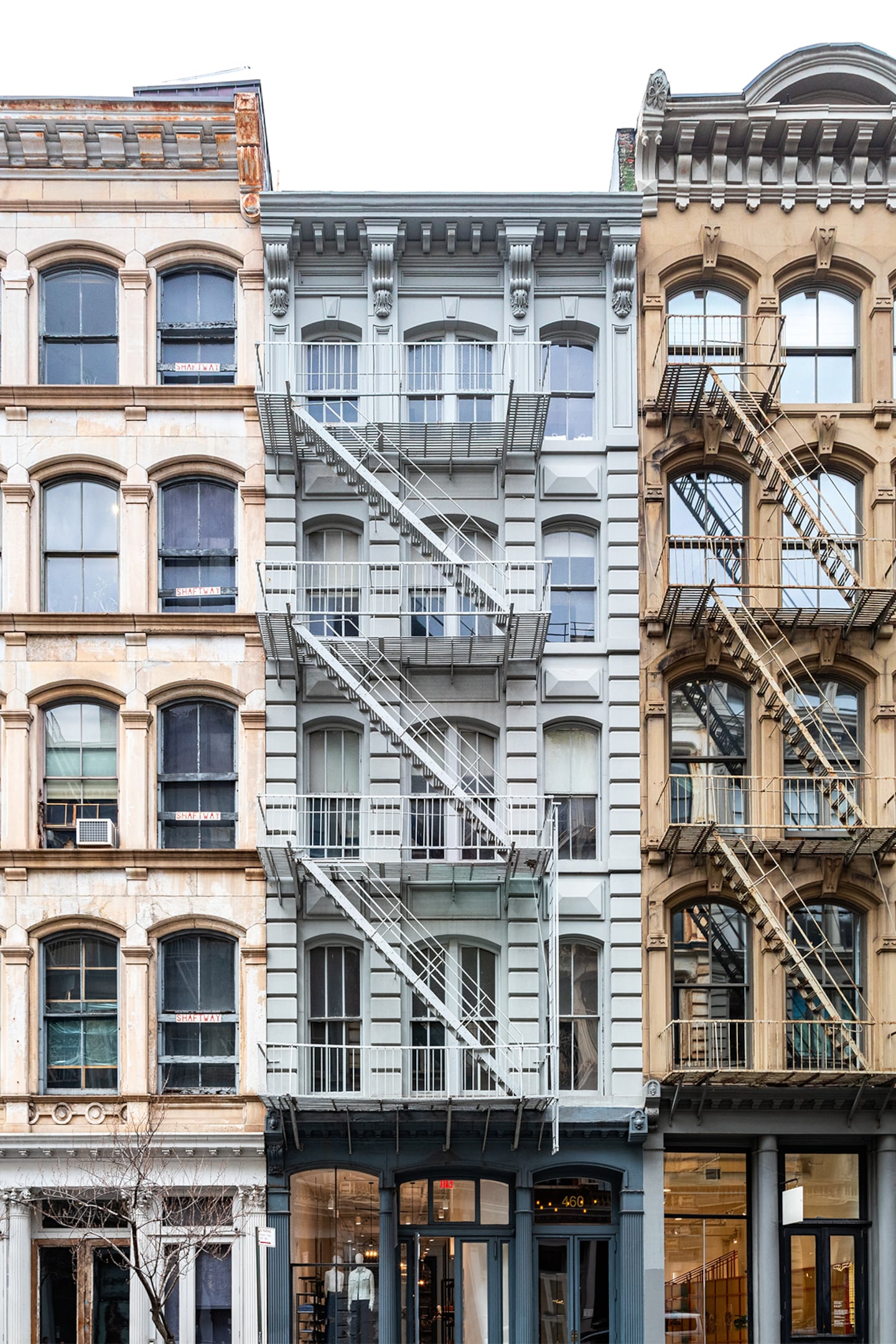
Jimmy Fairly operates more than 160 stores worldwide, from the Mediterranean island of Majorca and London’s Covent Garden to a few dozen across Paris. But the sunglasses brand took its time setting up a location in the US.
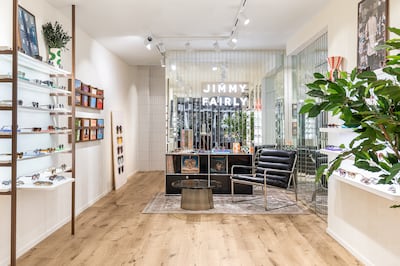
Though online sales in America have been soaring for years, its first store in the country, on New York’s Nolita corridor, opened only in December.
“I wanted to wait to be strong enough,” said founder and president Antonin Chartier. “We waited three years to make sure we had enough resources, making sure we had the right location and the right team.”
Jimmy Fairly’s New York flagship is opening at the tail end of a post-pandemic retail boom that has seen brands from Zara and Uniqlo to Loro Piana and Coach expand their physical footprint. They were all chasing after America’s resilient consumers, who continued to spend through the pandemic, inflation and more recently, tariffs. Talk of dead malls and vacant urban storefronts has given way to concerns about soaring retail rents.
ADVERTISEMENT
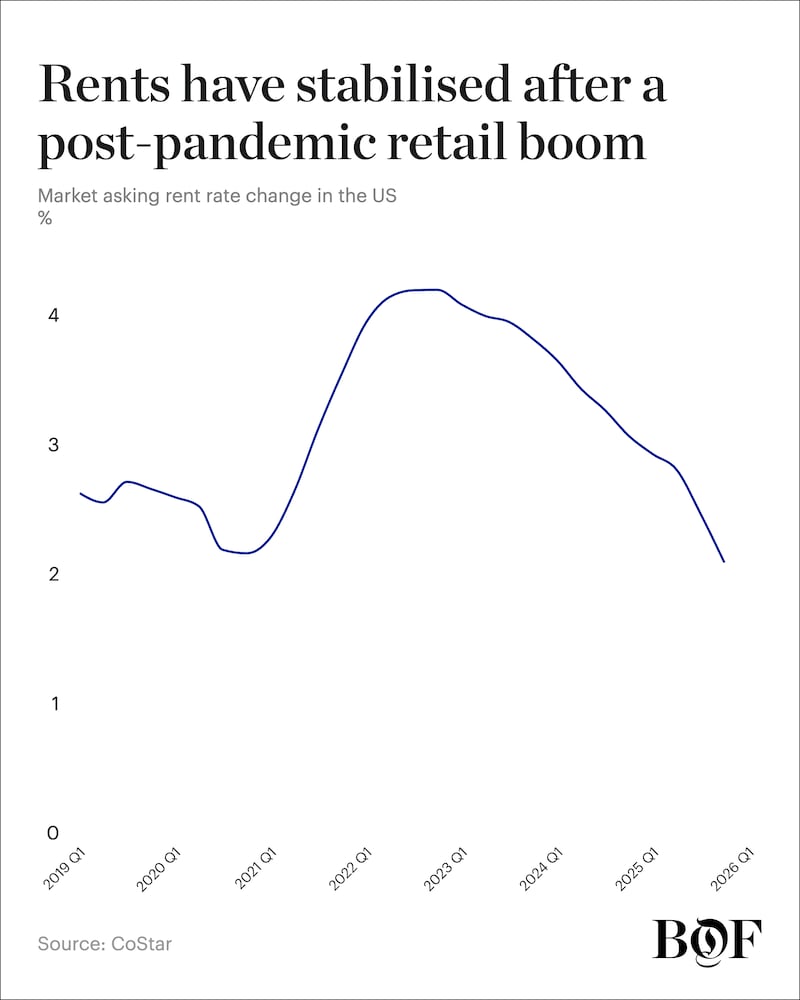
But there are signs the rally is winding down. In 2025, retail rents increased by 2 percent, the slowest pace in a decade, according to CoStar Group. And while Jimmy Fairly is eyeing additional locations in Austin, Miami, Los Angeles and Seattle later this year, others are retreating. Last year, US and UK store closures exceeded openings by more than 50 percent, according to Coresight Research, including hundreds of Claire’s stores that shuttered after its bankruptcy, as well as stores operated by plus-sized retailer Torrid, Signet Jewelers, Macy’s and others.
Similar trends are taking hold around the world. In 2025, H&M has said it will close 200 stores globally. Gucci, Loewe, Tiffany and Cartier have exited some second- and third-tier Chinese cites. In April, Gucci also shuttered an outpost on Melrose Place in Los Angeles that opened just two years earlier as it battles sliding sales.
Even in a cooling market, top-tier locations don’t stay empty for long — Khaite opened in the Gucci space just five months after the Kering brand left. And some of the luxury brands that have departed smaller Chinese cities are steering more investment towards the country’s biggest and richest regions.
But the realignment after years of unchecked growth should serve as a warning: While consumers may have demonstrated they still crave in-person experiences, it doesn’t take much for stores to swing from an asset to a liability.
“The penalty of going into the wrong space is much greater than not going into a space at all,” said Brandon Svec, national director of US retail analytics for CoStar Group.
The churn of openings and closures can be harmful to brand perception, signalling instability to consumers and eroding the sense of trust that physical retail is meant to convey. It can be damaging to margins, too. Between higher rents and build-out costs, closing a store in a competitive market often means taking a significant hit. In London, for instance, build-out costs have risen double digits compared to pre-pandemic rates, according to Marie Hickey, director of commercial research at Savills.
Brands may not always feel like they have much say in how quickly they expand, however. In boom times, investors reward retailers for chasing topline growth, even if it means gambling on capital-intensive store openings. When sentiment turns, physical retail is suddenly cast as a financial burden, triggering closures.
Preferably, brands get their store strategies right on the first try. That means identifying the right locations and waiting for them to open up rather than settling for the quieter street two blocks over, or the slightly shabbier mall. Good intelligence on which retailers are moving into and out of a neighbourhood helps, as does knowing who’s already shopping there.
ADVERTISEMENT
“It’s not enough for a brand to be like, ‘Oh, I want to be on this street,’” said Hickey. “Now, it’s being on the right street, at the best location in the key part of the street, and in the best unit.”
For Jimmy Fairly’s New York flagship, Chartier and his team spent days surveying the eastern part of SoHo to determine which streets had the best footfall, landing on a half block of Spring Street around the corner from trendy brands like Madhappy and Aimé Leon Dore.
Retail is becoming more bifurcated, with wealthy shoppers spending more every year, and poorer consumers pulling back. Real estate reflects both trends. The top 10 percent of US households account for nearly half of all consumer spending. Brands chasing these shoppers have little choice but to plant their flags where they live, work and socialise — a narrow and pricey set of zip codes.
The slower growth in retail rents reflects a decline on the low end more than moderation at the top. This is cold comfort to brands looking to expand: There are hundreds of former Rite Aid drugstores and Party City stores available to rent, but most fashion and lifestyle labels aren’t interested in those properties.
Instead, they all want to be in the hot spots, which is why competition is still fierce for space in luxury malls and upscale shopping areas.
“Generally speaking, it’s tougher to find the space you need than you think it will be,” Svec said.
Sometimes, the increased sales from being in a good location make up for soaring rent. Overall, the average sales per square foot in the US is about 25 percent higher today than pre-pandemic, according to Svec.
For there to be more balance in the market, there must be a reinvention of abandoned big boxes and other out-of-fashion vacant properties, according to Barrie Scardina, president of Americas retail services at Cushman and Wakefield. She pointed to one promising example: Last year, Netflix transformed a 120,000-square-foot space vacated by Lord & Taylor in the King of Prussia mall outside of Philadelphia into an immersive entertainment space, with a mini-golf course, carnival games, escape rooms and restaurant concepts all based on its original television shows.
ADVERTISEMENT
The idea is that as these spaces recalibrate, they eventually turn into destinations that fashion and beauty retailers want adjacency to. In the meantime, finding the right location will require plenty of patience. But this also grants retailers the resources to make the most out of the leases they’ve already signed.
“It can’t be the P&L that dictates the strategy,” said Chartier. “Retail only thrives when we focus on creating emotions, like through store design and experiences.”
Rents plummeted during the pandemic, allowing brands to open thousands of new stores this year. But on the hottest streets, the deals are over and bidding wars have begun.
From solo entrepreneurs to global giants, plenty of brands are still betting big on physical retail, despite the ongoing pandemic. What's the argument for such an unexpected strategy?
For up-and-coming brands, a few small, cleverly designed stores in the right locations can have a bigger impact than a giant flagship

Cathaleen Chen is Retail Editor at The Business of Fashion. She is based in New York and drives BoF’s coverage of the retail and direct-to-consumer sectors.
The embattled luxury department store is ‘absolutely dependent’ on companies like Chanel, LVMH and Kering, who could ‘suffocate’ the retailer if they stopped shipping, Reuters reported.
A direct-to-consumer strategy and cost discipline have helped the British brand grow without leaning on price hikes.
The 3.5-acre mixed-use estate in the affluent West London district is enhancing its retail and public-realm experience. BoF sits down with The Knightsbridge Estate’s Tom Woolven to discuss how changing consumer behaviour is informing the estate’s development and its curated mix of luxury, premium, lifestyle and wellness brands.
BoF Insights’ Brand Pulse tracking tool reveals how the industry’s top-performing contemporary and accessible luxury brands cultivated loyal online communities through sharp digital engagement strategies.
Thom Browne, Abercrombie & Fitch and Tecovas are among the brands with Super Bowl activations. Meanwhile, the Winter Olympics kick off in Milan.
The embattled luxury department store is ‘absolutely dependent’ on companies like Chanel, LVMH and Kering, who could ‘suffocate’ the retailer if they stopped shipping, Reuters reported.
The polarising actress has become one of the most frequently tapped brand ambassadors in Hollywood. Whether she has the sway to build a lasting venture with her new lingerie line Syrn is still to be determined.
Fresh off a week of major moments, Tim Blanks and Imran Amed break down the blockbuster couture debuts at Dior and Chanel and what they signify about the state of the luxury industry.