Agenda-setting intelligence, analysis and advice for the global fashion community.
Agenda-setting intelligence, analysis and advice for the global fashion community.
2025 was supposed to be the year for beauty M&A. There were some major deals: Rhode’s $1 billion dollar sale to E.l.f., Ulta Beauty’s purchase of Space NK, L’Oréal’s blockbuster move to acquire Medik8, Unilever’s pickup of Dr. Squatch and Kayali and Phlur’s sale to General Atlantic and founder Mona Kattan and TSG Consumer Partners, respectively. But somehow the year still felt slower than expected.
The disconnect comes down to the fact that, as many deals as there were last year, there were so many more brands on the market. Conglomerates are winnowing their mandates and slicing their portfolios (see: ELC, Coty), and independent brands are engaging with bankers very early.
I’m not sure if the latter is a good thing.
While it’s certainly helpful to engage with the likes of Raymond James or Goldman Sachs to get their take on where your brand stands, it also signals to the market you’re for sale — full stop. Almost every few weeks I’m getting notices that such and such brand hired so and so bank.
ADVERTISEMENT
One veteran investor reminded me this is historically how brands have started their sale processes. But with so much competition in the market it’s a tougher strategy to take. You don’t want to appear that you are sitting too long. I’m not going to pay top dollar for a house when it’s been on the market for three years, so why would you do that for a brand?
And a note on the competition, with so many similar labels in market — take the colour cosmetics category for instance — strategics and sponsors have the right to be choosy, creating a log jam for the year ahead.
But there is still hope, which is why I’m not running through every line for sale. Instead, I spoke to my expert sources and found the seven most desirable beauty brands that are on buyers’ radars.
Estimated 2025 Revenue - $200 Million
Projected 2026 Revenue - $250 Million
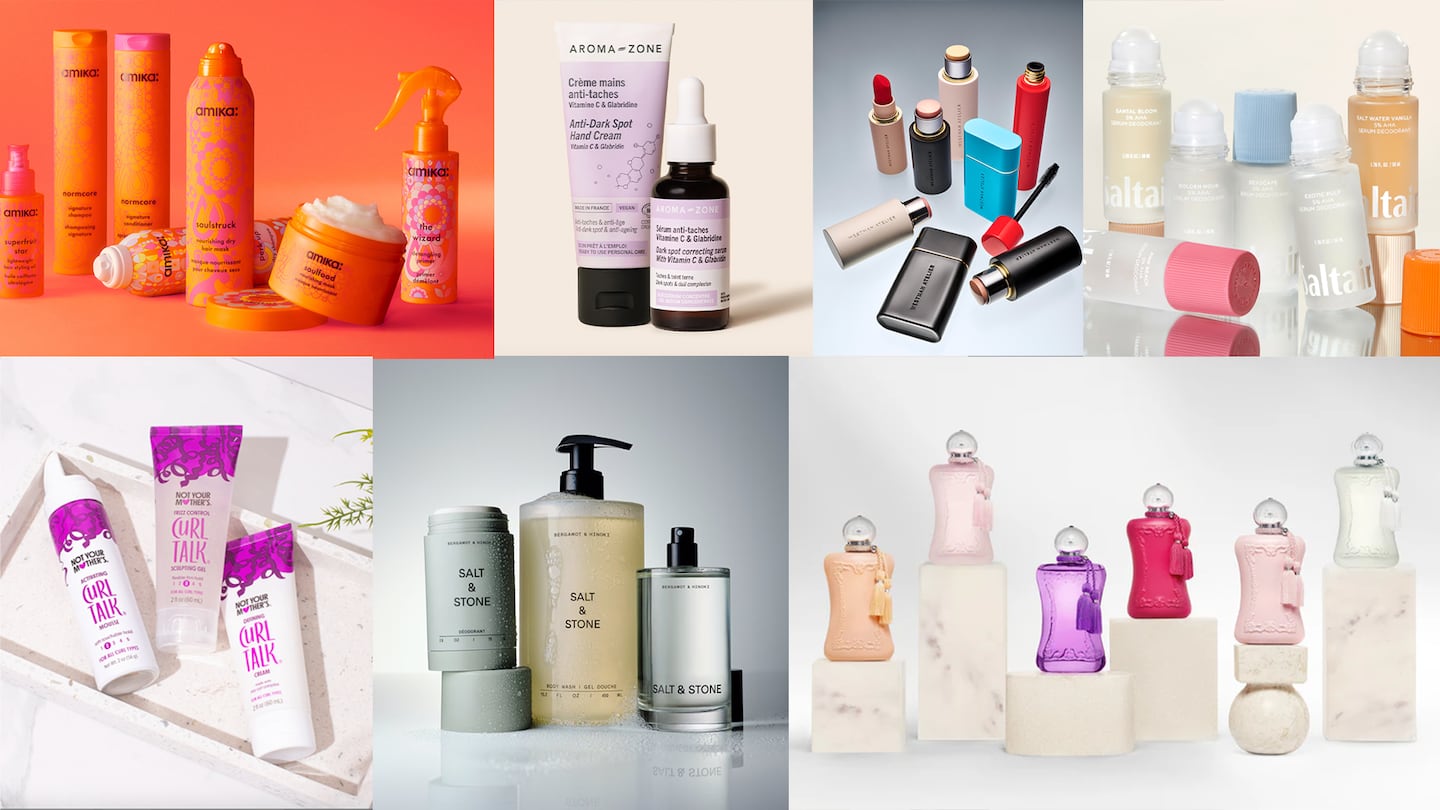
It was just three years ago that I had Parfums de Marly on my M&A target list, and suggested a private equity firm was the right buyer given how many people came to the table for Byredo the year before. Six months later, Advent International took the bet. Now, Advent is looking to unload the asset for a deal that could value the business at more than $2 billion. High perfumery remains one of the fastest growing parts of the fragrance market – think Amouage and Ex Nihilo. Meanwhile, Parfums de Marly has exploded under Advent, and has managed to diversify its portfolio away from its core scent Delina, which makes it more attractive to buyers.
Estimated 2025 Revenue - $80 Million
Projected 2026 Revenue - $100 Million
ADVERTISEMENT
Westman Atelier is one of the few makeup brands still on buyers’ shopping list. It helps that it didn’t engage with a banker until last year and that it’s largely taken soft conversations with conglomerates the last few years. Reportedly, Estée Lauder Companies continues to show interest (it made a bid for Westman Atelier early in its life cycle), as does L’Oréal (remember, Gucci Westman previously was Lancôme’s International Artistic Director); private equity companies also seem to be circling. The brand has performed strongly at Sephora and fills a luxury gap in most companies’ portfolios, which remains covetable.
There is also lots of runway ahead; the brand is not in Asia or the Middle East. Moreover, co-founders Westman and her husband David Neville remain meticulous about decision making, including its larger moves into skincare set to take place this year, and its push for greater profitability.
Estimated 2025 Revenue - $260 Million
Estimated 2026 - $315 Million
The timing is right for Amika, the professional and Sephora haircare darling, which recently moved into Ulta Beauty. While that usually causes cannibalisation, Ulta’s business is big and its salons and backbar program is critical for all haircare companies’ growth. So far, I’m hearing the results are good.
Even before Ulta Beauty, Amika’s Perk Up dry shampoo was the number one prestige dry shampoo in the market enabling it to corner the “wash care” (what a name) market. It also has the number one mask with its Soul Food franchise, proving its prowess in styling.
Amika, like the body brands I mention below, could easily go to healthier conglomerates like Unilever and Procter & Gamble, as I’m hearing PE shops are out of the question for this one. I expect this brand to overdeliver.
Estimated 2025 Revenue - $100 Million
ADVERTISEMENT
Projected 2026 Revenue - $150 Million
Pretty much anything that Ben Bennett and his accelerator The Center touches turns to gold. First there was Naturium, which sold to E.l.f. in 2023, then there was Phlur that sold to TSG Consumer last year. Saltair, the masstige bodycare line made in partnership with model Iskra Lawrence, appears to be next. Last July, the brand tapped Rachel Shelowitz as chief executive and Erin Sale as chief marketing officer, a critical step as the brand moves out of The Center’s umbrella and operates fully as its own entity.
Bodycare continues to boom and Saltair offers an elevated option for consumers looking for something better than Dove or Aveeno, plus it covers the whole range of body from lotions to hair. Justifiably, when you walk into a Target, its space is huge. Procter & Gamble and Unilever both come to mind as buyers, with the former outranking the latter in my opinion, given its success with Ouai. And don’t forget Vennette Ho of Raymond James is its banker; this is a deal sure to be done in the next 18 months.
Estimated 2025 Revenue - $140 Million
Projected 2026 Revenue - $160 Million
For lovers of the Byredo or Aesop vibe, Salt & Stone is for you. It also offers a bit for everyone: body washes, lotions and deodorants all touched with premium fragrance. Surprisingly, it has managed to grow a substantially large business centred on its $20 high-end deodorant. Body care remains dominated by mass players, but for buyers looking for an entree into the prestige segment of the category Salt & Stone could be a good case study. A PE sponsor is more likely here, but don’t count the conglomerates out, especially as they try to work out the economics of shower gel (it’s a notoriously hard segment to get right because of the margins). And don’t forget, it also has the Vennette Ho assist.
Estimated 2025 Revenue - $250 Million
Projected 2026 Revenue - $300 Million
Another masstige favourite, Not Your Mother’s is for the haircare customer who is ready to spend just a little bit more on her favorite styling products (the line starts at $6.99). Launched in 2010 by Rocky and Bethany Pagliarulo with just six products, the product count has expanded since. It still has plenty of opportunity in the wash category as it still hasn’t ventured into shampoo and conditioner.
While the brand has been floated to buyers in years past, it picked up an investment from private equity shop Main Post Partners in 2019 — it seems to have unlocked value via its smart marketing. In the spring Taking Stock of Teens survey by Piper Sandler (my fav!), the brand ranked second after Amika.
Estimated 2025 Revenue - $300 Million
Projected 2026 Revenue - $330 Million
A European favourite, French beauty brand Aroma-Zone is a line to watch carefully. Beyond its natural formulas and no-fuss aesthetic, the line has become known for its staggering financial performance. Reportedly, it has reached $100 million in earnings before interest, taxes, depreciation and amortisation. It has yet to venture to the US, presenting an opportunity (or a risk) for any prospective buyer. European acquirers are especially hot on it, and a deal near $2 billion is expected.
Want to dive deeper into an insight from this article? Check out The Brain of Fashion, BoF’s new generative AI tool where you can unlock BoF’s beauty archive with a single question.
Brands are designing products and packaging meant to be clicked, tapped and touched. Actually using them is beside the point.
This week, I look at the very different roads traveled by Pat McGrath and Charlotte Tilbury, wait with bated breath for Pleasing’s comeback and review LVMH’s beauty results.
European shoppers are increasingly buying beauty online, but local merchants face stiff competition from newer giants like Amazon and TikTok Shop.
As discovery commerce reshapes the beauty industry, this playbook details how brands can leverage modern shopping behaviours, boost awareness and build cross-channel demand through TikTok Shop’s creator-led marketplace — with insights from Phlur, Medicube and POV Beauty’s Mikayla Nogueira.
The embattled luxury department store is ‘absolutely dependent’ on companies like Chanel, LVMH and Kering, who could ‘suffocate’ the retailer if they stopped shipping, Reuters reported.
The polarising actress has become one of the most frequently tapped brand ambassadors in Hollywood. Whether she has the sway to build a lasting venture with her new lingerie line Syrn is still to be determined.
Fresh off a week of major moments, Tim Blanks and Imran Amed break down the blockbuster couture debuts at Dior and Chanel and what they signify about the state of the luxury industry.
Since the audit began in 2020, the Milanese fashion group found that more than a quarter of suppliers and subcontractors inspected had broken compliance rules.