Agenda-setting intelligence, analysis and advice for the global fashion community.
Agenda-setting intelligence, analysis and advice for the global fashion community.
Subscribe to High Margin by Robert Williams: perspectives on creativity and business in the world of luxury — from fashion and watches to art, wellness, travel and more
Two brands diverge in a very large group...Hello from Paris, where menswear week is in full swing. Polite, easy-to-wear clothes seemed to be winning the day, particularly at LVMH flagship Louis Vuitton. Until Dior pitched a curveball Tuesday afternoon.
In this week’s edition: New leadership and new priorities at Louis Vuitton, while Dior goes off in a whole new direction.
LVMH dominated the first two days of Paris menswear week — with Louis Vuitton showing Monday and Dior Tuesday, as well as presentations by Kenzo and Berluti. (The rest of the week is mostly indie labels, Comme des Garçons group and Hermès, where Véronique Nichanian is set to take her last bow. Kering’s brands are skipping the season or showing off-calendar.)
ADVERTISEMENT
This got me thinking about just how important menswear was for LVMH a few years ago. While far smaller than its womenswear business, men’s was a key vector for growth, as well as for powering cultural relevance and managing generational change. Virgil Abloh’s Louis Vuitton redefined the brand for young people across genders, particularly in the US. Kim Jones translated Dior’s couture codes for a generation of internet-savvy dressers who had probably never worn a suit and tie to work — and didn’t plan to. That new audience stayed connected to the brand even after his luxury sneakers and utility bags passed their peak.
Then, came luxury’s seismic slowdown. In China, four decades of double-digit economic growth stalled. The US fell back in love with stuff following the pandemic, but the affair was short-lived for all but the wealthiest customers. And social media’s shift to TikToks and reels meant that shoppers were no longer just learning how luxury brands looked in a photo, they were hearing everything that people had to say about them. Gen Z turned its back on logos as ideas like “old money” and “quiet luxury” became common parlance. Ultra-understated Loro Piana became LVMH’s hottest brand.
All of this has made it a tough time to be trying to beat record sales and keep up cultural impact at Louis Vuitton, luxury’s first $20 billion-per-year label, and its most logo-driven.
On the men’s side, Pharrell Williams’ first few shows seemed to be aimed at maintaining its larger-than-life hype while transitioning the product to a less graphic, more dandy-ish aesthetic.
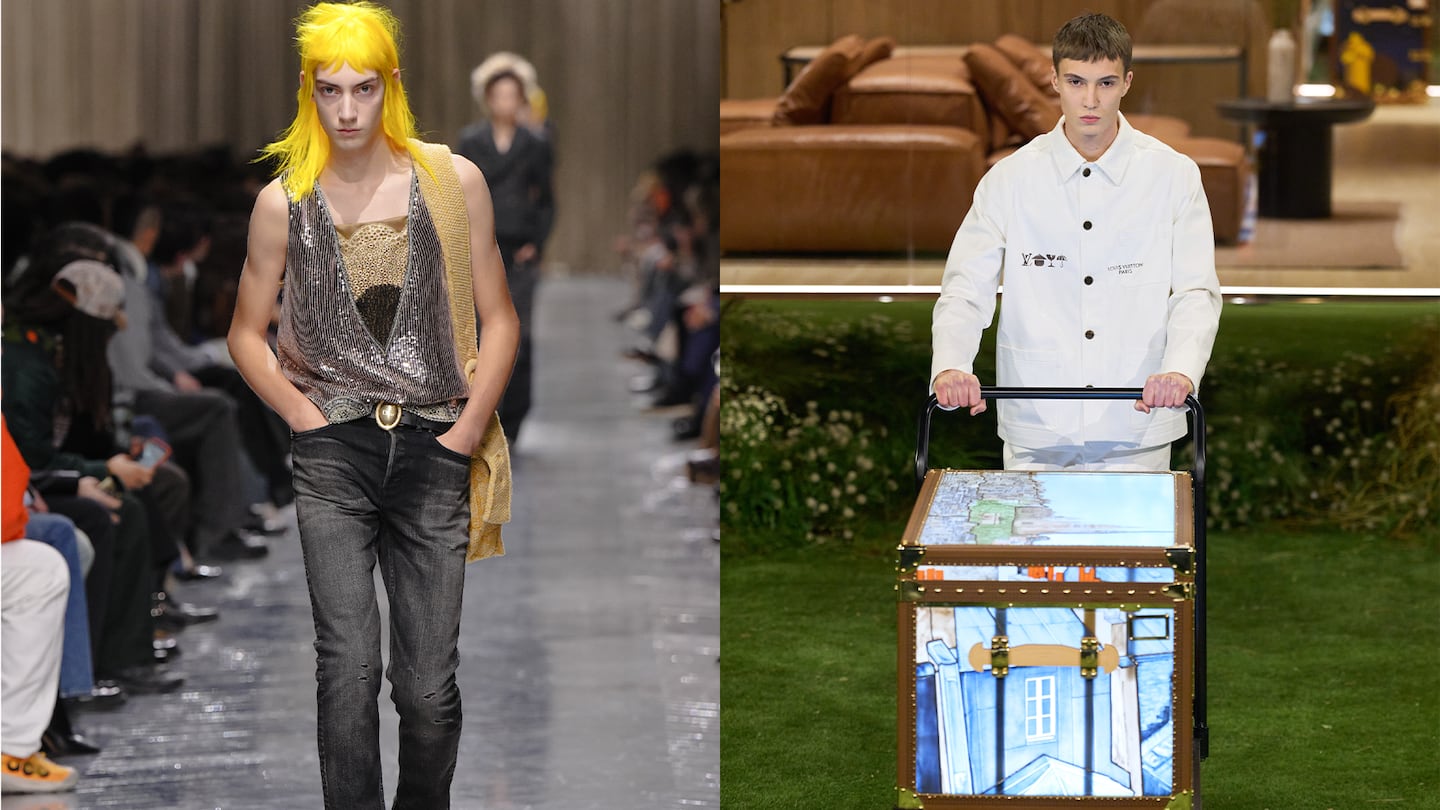
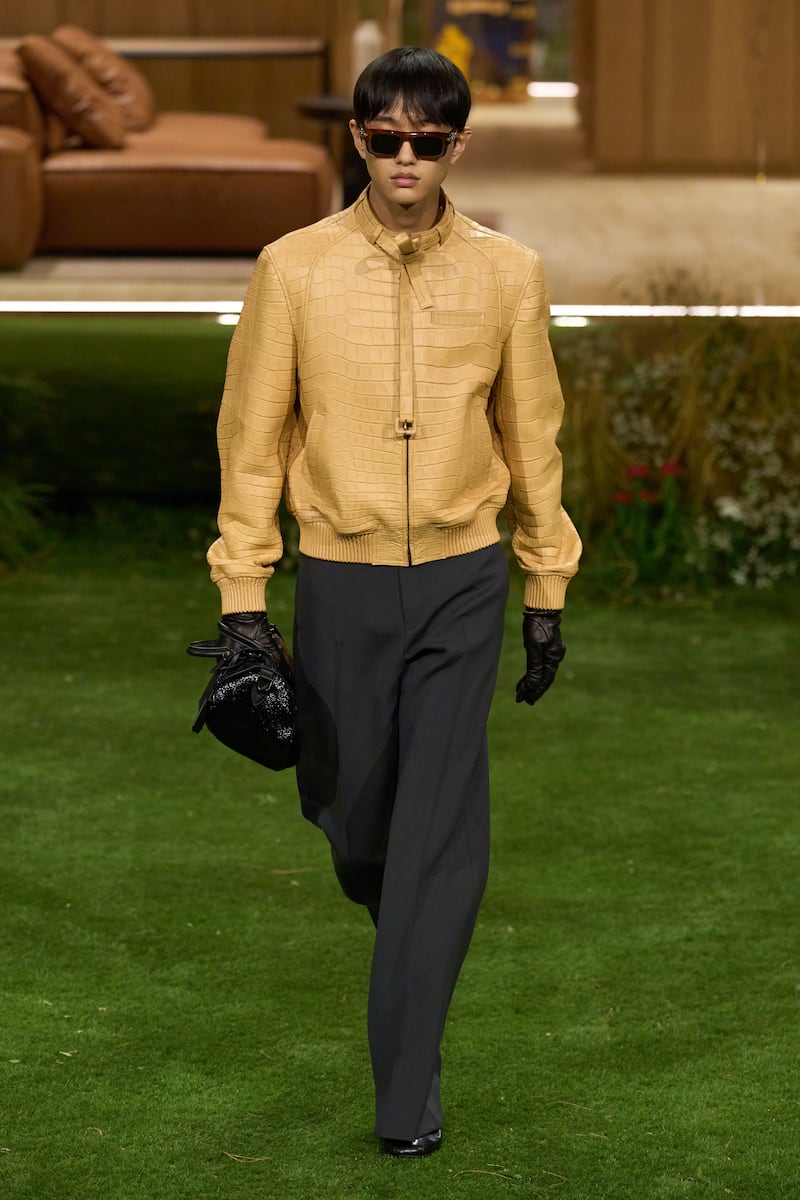
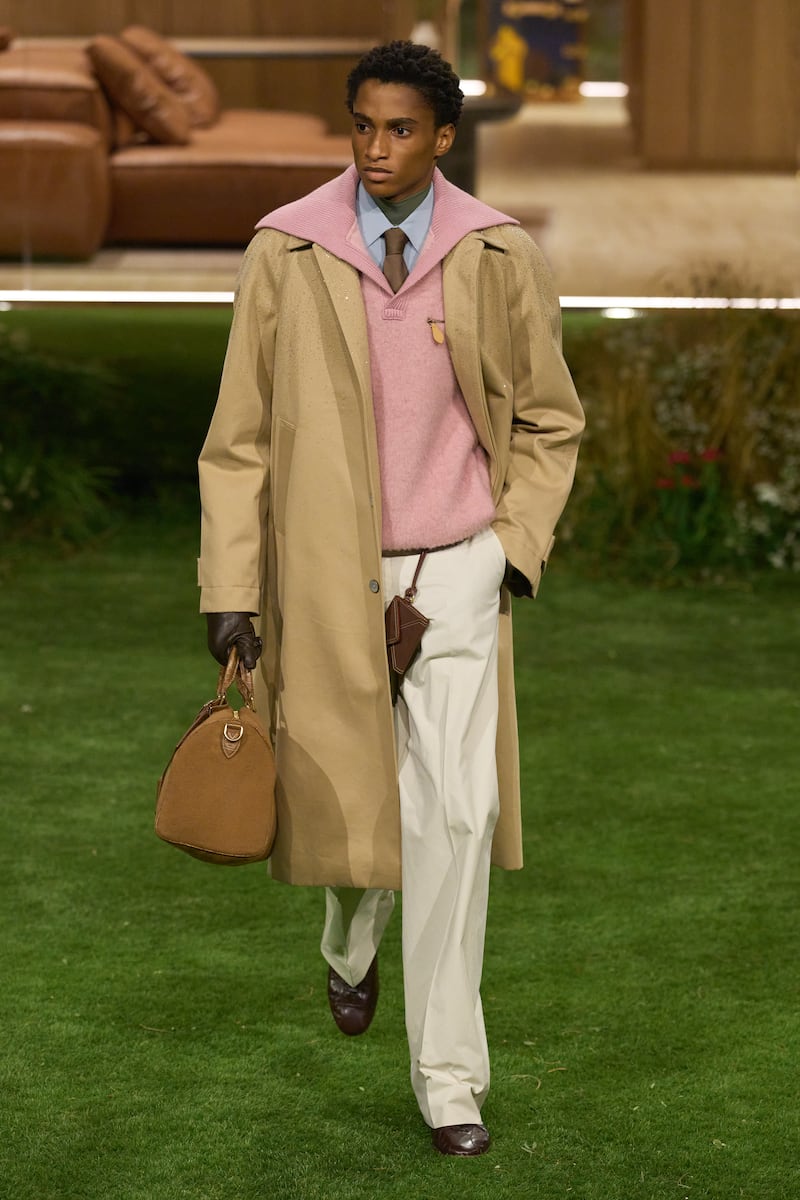
But Monday night’s show was a clear break. Pharrell’s use of monogram and logo was radically pulled back. So was the use of other bold signatures like patchwork and all-over embroidery. There were polite suits, car coats, unstructured blazers, leather bombers and lots of neckties. If a few pieces were studded with iridescent strass, most of the clothes looked as classic as classic can be. Campy Americana was stripped away in favour of a more global, neutral take on aristocracy. Earlier in the day, The Business of Fashion published an op-ed on “the epidemic of nice clothes.” Here was a case in point.
The Loro Piana effect was palpable. Unsurprisingly, perhaps, as the brand’s chief executive Damien Bertrand decamped to Louis Vuitton as deputy CEO a year ago, and has steadily expanded his power base in the brand. He is increasingly taking the lead as current chief Pietro Beccari shifts to a new role overseeing LVMH’s Fashion Group in addition to Vuitton.
The clothes were nice. Several editors and buyers told me it was their favourite Pharrell show yet. In addition to the reconfigured C-suite, I hear the brand has a new design director, Thibo Denis — formerly Kim Jones’ sneaker whiz — who is making his mark.
The set was an over-tasteful, glass-walled house designed by Pharrell with Japanese firm Not a Hotel: the kind of place you imagine a professional athlete hiding away by a lake. The brand seemed to be addressing a fantasy of discreet, private wealth (increasingly a reality as the rich isolate themselves in frictionless luxury bubbles).
ADVERTISEMENT
I thought that addressing a more private world — with clothes that were guarded rather than graphic, conveying a sense of aesthetic permanence over personality — was an interesting exercise for the brand. But one that put it on its back foot: this is the world’s biggest and most visible luxury house. Even when the cues seem to be coming from such formidable enterprises as LP and Hermès, benchmarking against rivals feels like retrenchment at a brand of Vuitton’s stature.
Still, Louis Vuitton also has one of the world’s most robust store networks, and in today’s economy (and pricing landscape), it needs to fill those stores with things actual wealthy people want to wear and buy. Depending on repeat customers rather than one-off traffic is a defining feature of the brands that are working today.
The shift to a more restrained aesthetic may also be necessary to keep up with shifting values in China: Beyond the organic shift in trends and taste, social networks have purged some content “showing off wealth and worshipping money” since 2024, in line with the CCP’s “common prosperity” push. Brands and financial analysts downplayed the policy’s impact when it was announced, but the sentiment nonetheless seems to have rippled through culture.
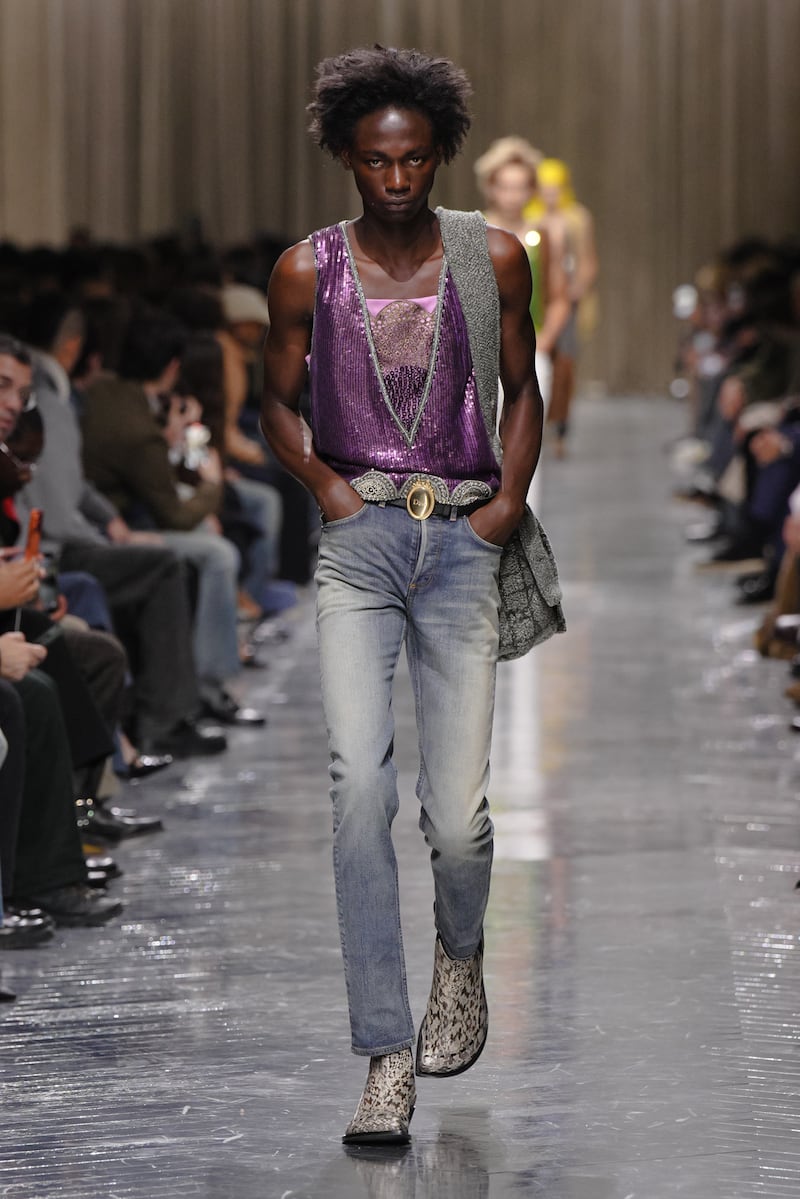
For his second menswear show as creative director of Dior, Jonathan Anderson took a completely different approach from Vuitton’s. After a debut collection that focused on neo-preppy styling, aristocratic formalwear and revisited normcore, this season’s show was bold, challenging, in your face. Models wore teased-out yellow party wigs and electric-blue python shoes. Clubbing tops and grungy grommeted cargo shorts collided with opulent Orientalist shawls and silk tunics. Army parkas were deconstructed into floor-length puffer capes. Knitwear included tailcoat cardigans and jumpers topped with tasseled epaulettes.
The Dior house codes were only really visible in a series of Bar jackets, subverted by the use of distressed denim or punk plaids. Instead, the time-travel element that has defined Anderson’s tenure so far was focused on turn-of-the-century couturier Paul Poiret, whose eclecticism and excess helped define Paris fashion as a playground for fantasy.
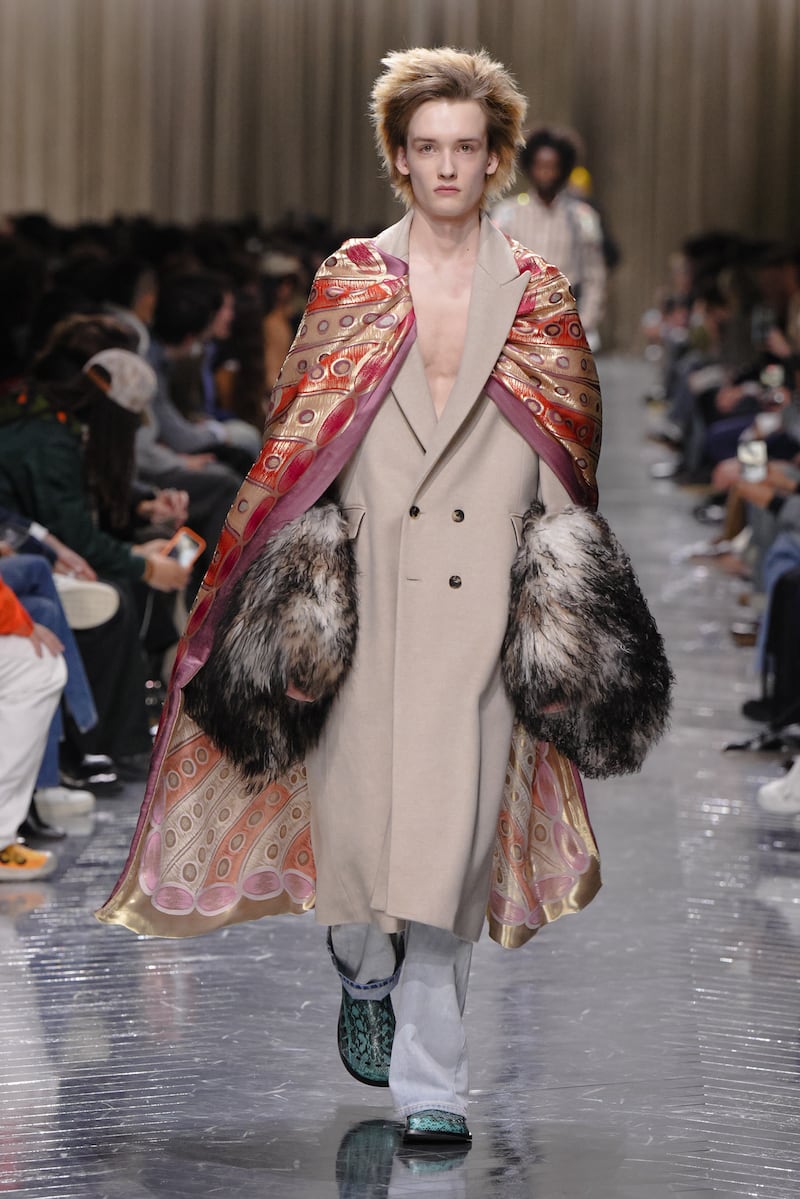
Rather than conforming to the diktats of low-key luxury, Anderson seemed to be acknowledging that that space is already saturated; its potency for signalling status undergoing rapid dilution. His show’s narrative—about punks cosplaying as aristocrats while the aristocrats cosplay as punks—tapped into the ambient confusion about what “good taste,” luxury and status even mean today.
It was quite a curveball from a designer whose recent campaigns and pre-fall lookbooks came across as a well behaved, gentle transition from Dior’s Maria Grazia Chiuri-Kim Jones era. Necessarily so, as his creative direction needs to sustain a nearly $10 billion per-year business. And yet — perhaps — deleteriously so as well: Wasn’t getting people excited about fashion again what this year of designer reshuffles was all about?
Disclosure: LVMH is part of a group of investors who, together, hold a minority interest in The Business of Fashion. All investors have signed shareholders’ documentation guaranteeing BoF’s complete editorial independence.
As the first creative director to succeed founder Azzedine Alaïa, Mulier rejuvenated the Paris-based brand with highly-refined, sculptural styles, bringing runway drama and spawning commercial hits like the Teckel bag and mesh ballerina flats.
High jewellery brands including Boucheron, Chaumet, De Beers and Dior showed new collections at Haute Couture week in Paris as they manage so far to ride out geopolitical tensions which have sent gold and silver to new highs while the dollar sinks.
Matthieu Blazy and Jonathan Anderson each took different approaches to navigating the inherent tensions of French couture, Robert Williams writes. Plus: LVMH’s results.
Fourth-quarter sales in the world’s biggest luxury group rose 1 percent, slightly ahead of expectations. Sales fell 3 percent in the key fashion and leather goods division as the sector continues to face sluggish demand. ‘2026 will not be easy,’ chairman Bernard Arnault said.
Thom Browne, Abercrombie & Fitch and Tecovas are among the brands with Super Bowl activations. Meanwhile, the Winter Olympics kick off in Milan.
The embattled luxury department store is ‘absolutely dependent’ on companies like Chanel, LVMH and Kering, who could ‘suffocate’ the retailer if they stopped shipping, Reuters reported.
The polarising actress has become one of the most frequently tapped brand ambassadors in Hollywood. Whether she has the sway to build a lasting venture with her new lingerie line Syrn is still to be determined.
Fresh off a week of major moments, Tim Blanks and Imran Amed break down the blockbuster couture debuts at Dior and Chanel and what they signify about the state of the luxury industry.