Agenda-setting intelligence, analysis and advice for the global fashion community.
Agenda-setting intelligence, analysis and advice for the global fashion community.
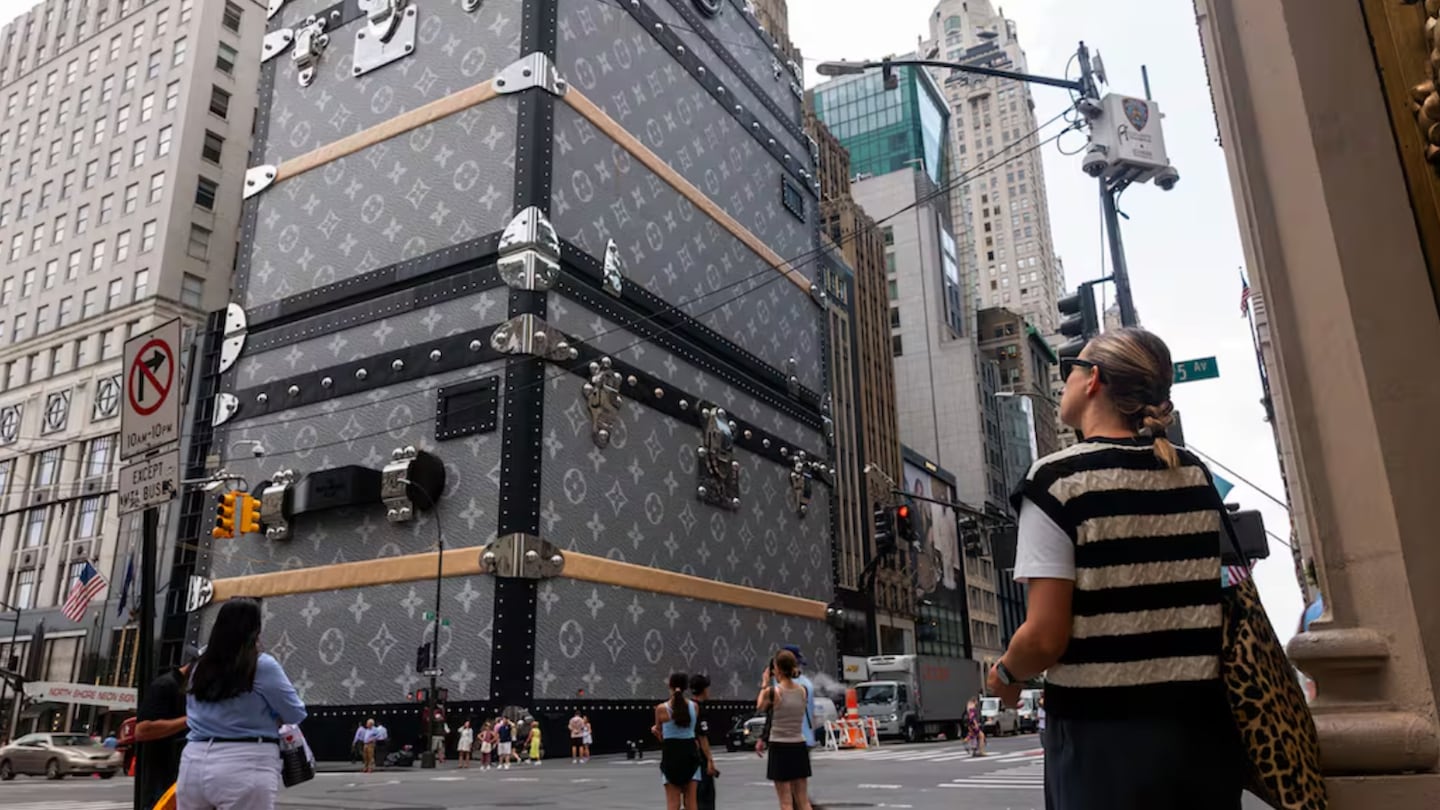
If stock prices are any indication, investors are bracing for a rough earnings season for luxury-goods makers.
A Goldman Sachs Group Inc. basket of luxury stocks has slumped 8.1 percent this year on flaring geopolitical tensions and questions over Chinese consumer demand, trimming much of its gains from the past two quarters. It’s an unwelcome turn, given that analysts have projected a return to growth in 2026 following two years of stagnation.
“Investors are fretting that the anticipated earnings recovery is being pushed a little further out into the future,” said Sam Glover, a fund manager at EFG Asset Management. “We have seen some unwind of the more speculative buying that we saw in certain luxury names through the fourth quarter last year.”
French luxury giant LVMH’s fourth-quarter results, due Tuesday, are the next test of how the industry is faring. France’s other big luxury companies, Kering SA and Hermès International, report Feb. 10 and Feb. 12, respectively. Despite the year-to-date declines, all of the stocks remain above their 2025 lows, with Kering a notable outperformer, gaining 75 percent.
ADVERTISEMENT
Optimism picked up after US president Donald Trump in April backed off his most harsh tariff proposals. The Goldman luxury index surged 26 percent from its April low through mid November, when stock prices stagnated for a month or more. Then a fresh bout of trade tension this month sent share prices slumping again.
Earnings for LVMH, Hermès, Moncler SpA and Kering are expected to decline 6.1 percent on average in the fourth quarter, significantly underperforming the MSCI Europe where the estimated growth is 1.3 percent over the same period, according to data compiled by Bloomberg Intelligence. The key for this reporting season will be whether companies are confident they can deliver a profit rebound in 2026.
For investors, there’s a lot riding on whether the sector can recover. For years, luxury stocks were seen as Europe’s answer to Big Tech: Big, fast-growing companies with resilient business models. Yet ever since interest rates surged in 2022 and Chinese demand started waning, the stocks as a group have underperformed the broader market.
The sector got a bit of reprieve last week when Trump dropped his threat of tariffs on European countries in his pursuit of Greenland, easing worries over sales in the US. Analysts see North America as an important driver of growth this year.
Analysts will be looking to LVMH’s results for signs that new creative directors at the company’s fashion houses and long-awaited store initiatives will translate into better earnings this year.
This season’s industry results so far have been met with mixed reviews.
Cartier owner Richemont SA reported better-than-expected sales, yet traders still punished the stock because demand remained subdued in mainland China and currencies and rising material costs weighed on profit margins. At Burberry Group Plc, which is undergoing a turnaround under a new CEO, Greater China drove the UK trenchcoat maker’s sales beat, lifting its stock price on the day of earnings, an advance it has since given up.
LVMH’s results will give a better view, said Deutsche Bank AG analyst Adam Cochrane, “but the base case is now that China is going to show a sequential deceleration across most luxury brands.” Analysts expect that organic sales at the company’s key fashion and leather goods unit probably fell 2.9 percent in the fourth quarter.
ADVERTISEMENT
For the sector overall, Bank of America Corp. analysts expect a pickup in growth this year, with revenues increasing 5 percent, compared with a drop of 1 percent over 2023-2025. The cycle of analyst earnings downgrades has paused, helping fuel the rally in the second half of last year, they said.
With investors having pulled back from the stocks and more realistic expectations on a recovery in China, “we feel the risk-reward into the rest of the reporting is healthier,” said Chiara Battistini, an analyst at JPMorgan Chase & Co.
Still, uncertainty around the state of the Chinese consumer is likely to persist over the coming weeks. The Chinese New Year holiday — a critical sales period for luxury — sometimes falls in late January or early February, meaning executives can comment on earnings calls on the trends they’re seeing. This year the holiday is in the second half of February.
“Luxury stocks entered the year with elevated hopes that China would rebound faster and more uniformly, which has not yet fully materialized outside a few pockets,” said John Plassard, head of investment strategy at Cité Gestion.
“Luxury-goods makers could post a gradual earnings recovery on limited price hikes and a shift toward volume-led growth, as tariff-linked pressure is absorbed. Better sentiment and early signs of a China spending revival supported more-resilient high-end companies over entry-level ones in 2025. Aspirational fashion and entry-level luxury brands are battling lower-for-longer demand, with soft consumer confidence lingering among price-sensitive shoppers,” says analysts Deborah Aitken and Andrea Ferdinando Leggieri.
Another reason investors are wary about the sector is its lofty valuations. Even as its forward price-earnings ratio has eased off an almost four-year high, luxury stocks still trade at a greater-than-average 74 percent premium to the pan-European Stoxx 600 Index.
“The key message is: Don’t get ahead of yourself,” Bank of America’s Ashley Wallace said in an interview. “The market has priced in a lot and there’s still an element of low visibility around the shape of the global luxury demand recovery.”
By Levin Stamm
Disclosure: LVMH is part of a group of investors who, together, hold a minority interest in The Business of Fashion. All investors have signed shareholders’ documentation guaranteeing BoF’s complete editorial independence.
As the first creative director to succeed founder Azzedine Alaïa, Mulier rejuvenated the Paris-based brand with highly-refined, sculptural styles, bringing runway drama and spawning commercial hits like the Teckel bag and mesh ballerina flats.
High jewellery brands including Boucheron, Chaumet, De Beers and Dior showed new collections at Haute Couture week in Paris as they manage so far to ride out geopolitical tensions which have sent gold and silver to new highs while the dollar sinks.
Matthieu Blazy and Jonathan Anderson each took different approaches to navigating the inherent tensions of French couture, Robert Williams writes. Plus: LVMH’s results.
Fourth-quarter sales in the world’s biggest luxury group rose 1 percent, slightly ahead of expectations. Sales fell 3 percent in the key fashion and leather goods division as the sector continues to face sluggish demand. ‘2026 will not be easy,’ chairman Bernard Arnault said.
Thom Browne, Abercrombie & Fitch and Tecovas are among the brands with Super Bowl activations. Meanwhile, the Winter Olympics kick off in Milan.
The embattled luxury department store is ‘absolutely dependent’ on companies like Chanel, LVMH and Kering, who could ‘suffocate’ the retailer if they stopped shipping, Reuters reported.
The polarising actress has become one of the most frequently tapped brand ambassadors in Hollywood. Whether she has the sway to build a lasting venture with her new lingerie line Syrn is still to be determined.
Fresh off a week of major moments, Tim Blanks and Imran Amed break down the blockbuster couture debuts at Dior and Chanel and what they signify about the state of the luxury industry.