Agenda-setting intelligence, analysis and advice for the global fashion community.
Agenda-setting intelligence, analysis and advice for the global fashion community.
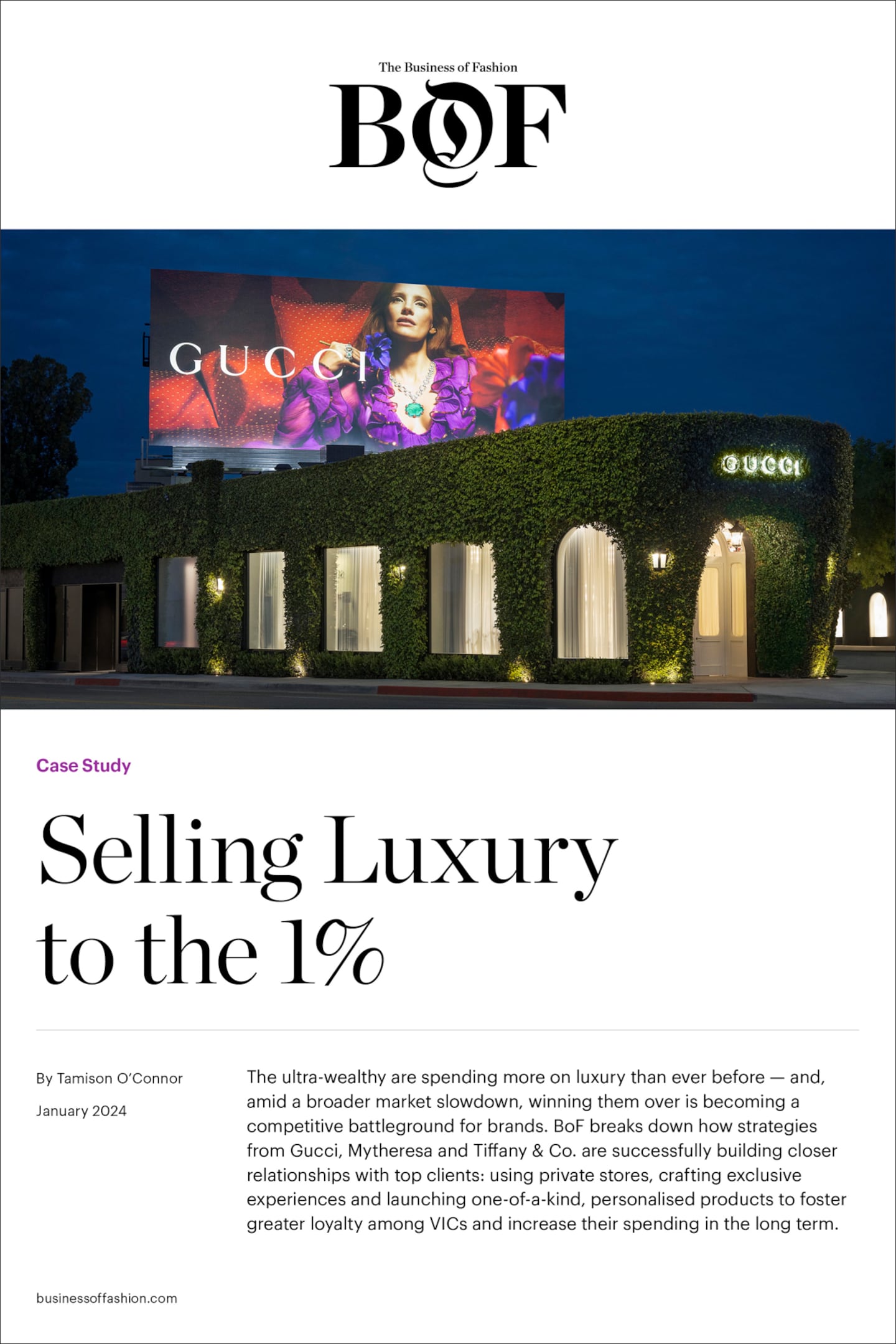
Since the world emerged from 2020′s coronavirus lockdowns, spending on luxury goods has gone into overdrive. This spelled good news for high-end brands, which experienced explosive growth fuelled by stimulus packages, deferred student loan schemes and fewer opportunities to spend money on experiences.
But during 2023, aspirational consumers hit by the rising cost of living finally sobered up. As growth of the broader luxury market slows, attracting the top 1 percent of earners, whose well-padded budgets are more insulated from global uncertainty, will be key to driving sales. Already, courting “VICs” — very important clients — has become a strategic focus for brands. However, engaging this consumer cohort is only becoming more challenging, as competition for their attention intensifies. The dynamic is pushing retailers and megabrands to implement more sophisticated, differentiated strategies to foster relationships.
This case study will examine strategies adopted by Gucci, Mytheresa and Tiffany & Co. that are designed to build closer relationships with top clients, foster greater loyalty and increase their spending in the long term.
Gucci opened its first by-appointment store exclusively for servicing the brand’s most important clients in Los Angeles, dubbed “Gucci Salon.” Here, the brand’s most exclusive product ranges are on display, while each appointment is carefully tailored to the needs and desires of each customer. The brand has replicated the concept with dedicated private floors at flagship stores in London and Tokyo.
ADVERTISEMENT
Mytheresa ratcheted up its calendar of elaborate events (often hosted in collaboration with its clients’ favourite brands) offering exclusive access that money alone can’t facilitate: from intimate dinners at designers’ private residences to starry, insider-only shows and parties.
Meanwhile, Tiffany & Co. has rapidly expanded its ultra-exclusive high-jewellery division, with a particular emphasis on personalisation. This includes sourcing unrivalled gemstones and inviting clients to commission bespoke pieces from chief artistic officer Nathalie Verdeille at its newly renovated experiential flagship in New York.
These strategies offer valuable lessons on how cultivating personal relationships and crafting memorable experiences for shoppers can foster an emotional connection to brands, helping them to stand out among competitors and build loyalty among luxury’s most sought-after customers.
Disclosure: LVMH is part of a group of investors who, together, hold a minority interest in The Business of Fashion. All investors have signed shareholders’ documentation guaranteeing BoF’s complete editorial independence.
As the first creative director to succeed founder Azzedine Alaïa, Mulier rejuvenated the Paris-based brand with highly-refined, sculptural styles, bringing runway drama and spawning commercial hits like the Teckel bag and mesh ballerina flats.
High jewellery brands including Boucheron, Chaumet, De Beers and Dior showed new collections at Haute Couture week in Paris as they manage so far to ride out geopolitical tensions which have sent gold and silver to new highs while the dollar sinks.
Matthieu Blazy and Jonathan Anderson each took different approaches to navigating the inherent tensions of French couture, Robert Williams writes. Plus: LVMH’s results.
Fourth-quarter sales in the world’s biggest luxury group rose 1 percent, slightly ahead of expectations. Sales fell 3 percent in the key fashion and leather goods division as the sector continues to face sluggish demand. ‘2026 will not be easy,’ chairman Bernard Arnault said.
Thom Browne, Abercrombie & Fitch and Tecovas are among the brands with Super Bowl activations. Meanwhile, the Winter Olympics kick off in Milan.
The embattled luxury department store is ‘absolutely dependent’ on companies like Chanel, LVMH and Kering, who could ‘suffocate’ the retailer if they stopped shipping, Reuters reported.
The polarising actress has become one of the most frequently tapped brand ambassadors in Hollywood. Whether she has the sway to build a lasting venture with her new lingerie line Syrn is still to be determined.
Fresh off a week of major moments, Tim Blanks and Imran Amed break down the blockbuster couture debuts at Dior and Chanel and what they signify about the state of the luxury industry.