Agenda-setting intelligence, analysis and advice for the global fashion community.
Agenda-setting intelligence, analysis and advice for the global fashion community.
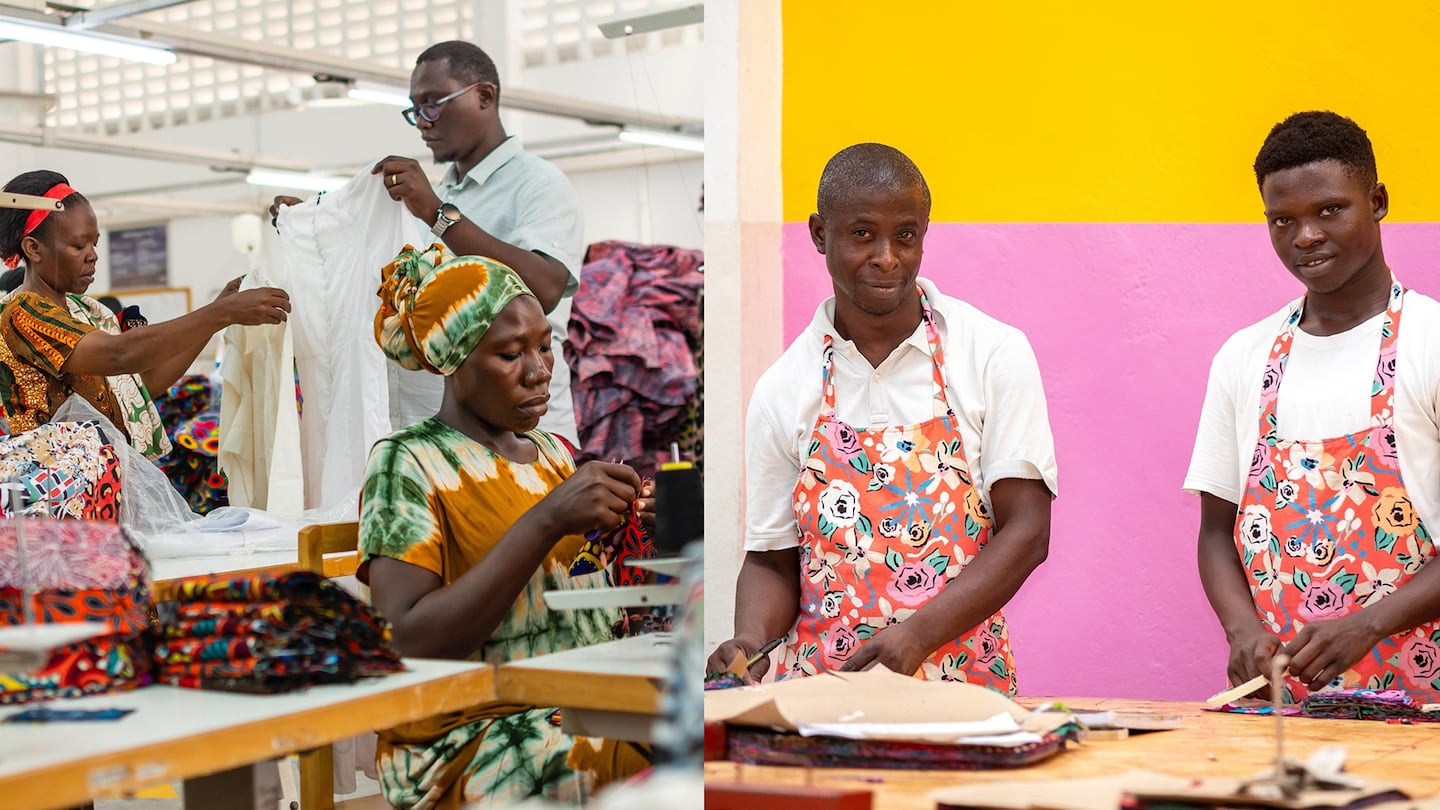
“We are all living with uncertainty,” says Joanna Maiden, chief executive of Soko Kenya, with palpable unease. Last year’s US tariff turmoil threatened the livelihoods of 66,000 workers in Kenya, predominantly women supporting hundreds of thousands of dependents, including those at her garment factory. The September expiry of the African Growth and Opportunity Act (AGOA) then made Kenyan exports even more expensive for US buyers.
Supplying brands such as Asos and Alemais from facilities outside Mombasa, Soko Kenya currently exports 90 percent of its production to the US. Washington’s chaotic tariff rollout and subsequent inaction over AGOA, the US duty-free trade programme for 32 eligible African countries, have forced Maiden to double down on diversification efforts to Europe and Australia. However, she is concerned that prospective buyers will see Kenya as a risky sourcing country “because it’s out of the norm from the perspective of smaller brands.”
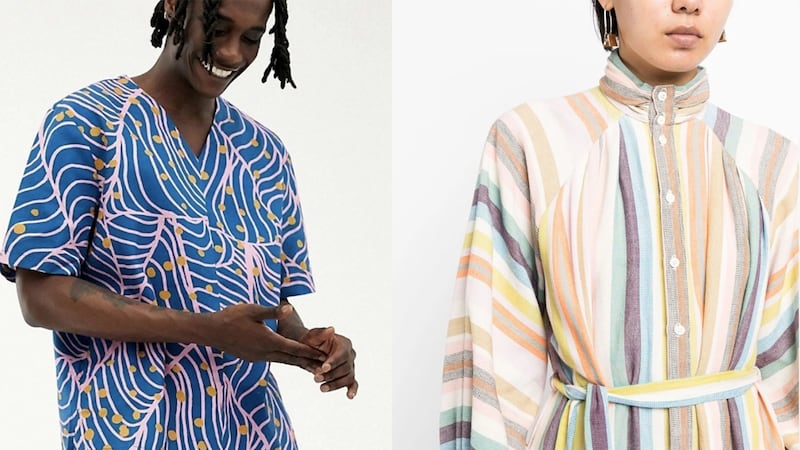
For existing clients, Maiden will look at trimming prices to soften the blow for those affected by tariff hikes. But she remains circumspect about the bigger picture. “Where does this extra cost go? Who has to take the hit?” she asks. “Those conversations will [at least] be collaborative, whereas other struggles [that emerge at times like this] are usually passed down to the factories.”
Companies have warned that AGOA’s lapse risks job losses and even factory closures, with African countries now facing US tariffs ranging from 9-32percent, according to UNCTAD, the United Nations Trade and Development body. Officials at the International Trade Centre warned that the lapse means many eligible countries will be hit by a “major drop in exports to the US,” with the most vulnerable, including Lesotho, experiencing a “debilitating” hit.
ADVERTISEMENT
Back in November, the Kenya Association of Manufacturers’ chief executive Tobias Alando told local media that AGOA’s expiry would cause the nation to “lose competitiveness against other global players.” He added that it would not only reduce Kenya’s export earnings, “but also threaten jobs, investments, and industrial growth that rely heavily on the US market.”
Relief for Alando’s members hinges on whether AGOA is reinstated. African manufacturers remain in limbo until both chambers of US Congress — and President Donald Trump — approve a proposed three-year extension that is currently moving through the legislative process. The measure would keep key apparel schemes alive, including the third-country fabric provision, and would be retrospective, allowing US importers to seek refunds on duties paid during the lapse through a claims process.
The AGOA Extension Act passed the House of Representatives on Jan. 12 and is now before the Senate. Bills can take up to several months to come to a vote and, if approved, the president will then have 10 days to sign it into law. Trump could, however, veto the act, which would require Congress to override it.
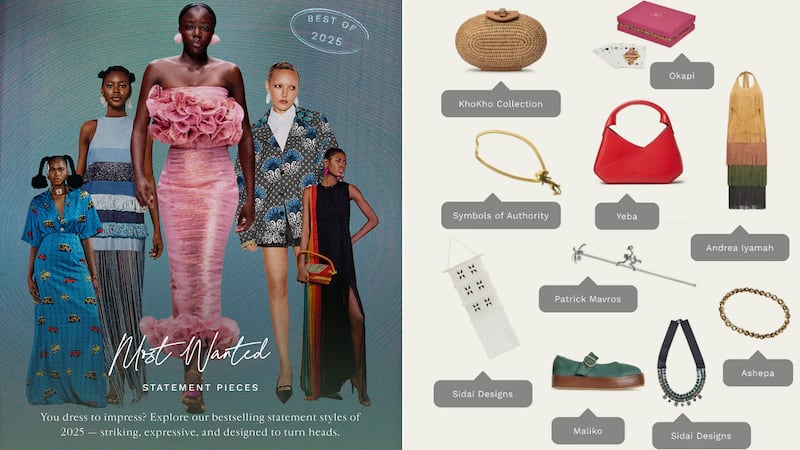
It’s not only manufacturers that have been hit by the end of the scheme. In the face of dampening demand and squeezed margins, African fashion brands exporting to the US are also rebuilding pricing to include the new duties, says Tanzanian entrepreneur Nisha Kanabar.
“The US-based shopper is very price sensitive and is likely to reconsider their purchasing decision even if prices rise by a few dollars,” says Kanabar, founder of Industrie Africa, an e-tailer selling upmarket fashion brands from over a dozen African countries to the US and other markets.
AGOA’s expiry also affects the sourcing partners of African suppliers in the US, a point highlighted by the American Apparel & Footwear Association (AAFA) last October.
“We are frustrated by the failure to act on these long-standing, bipartisan trade preference programs that clearly benefit local garment industries abroad as well as made-in-America cotton and textile exporters, American brands, and the 3.6 million American workers directly supported by the fashion industry,” said AAFA’s vice president of trade and customs, Beth Hughes, in reference to the lapse of both AGOA and the Haiti HOPE/HELP programmes.
“Despite persistent and constructive engagement from a wide range of stakeholders, Congress has fallen short in renewing these mutually beneficial programmes, ultimately surrendering further strength to China’s manufacturing influence by placing unnecessary obstacles in the way of viable sourcing alternatives.”
ADVERTISEMENT
Hughes underscored the dangers in testimony, citing the case of a US-based apparel business that invested in Madagascar. She said the investment, which included a new factory on the African island, aimed to improve supply chain resilience and reduce dependence on Asian hubs. “The company’s entire business plan depends on the continuation of AGOA,” she said.
Ultimately though, it is African garment workers and manufacturers who have the most to lose. In Madagascar, textiles and apparel account for around a fifth of the country’s gross domestic product. After the tariff troubles began, Beatrice Chan Ching Yiu, president of the Madagascan lobby group, the Groupement des Entreprises Franches et Partenaires, said “measures such as temporary layoffs or dismissals may prove unavoidable.”
Data from the US Office of Textiles and Apparel (OTEXA) for 2024 shows Kenya as the largest AGOA-eligible exporter of textiles and apparel ($533.0 million) to the US, followed by Madagascar ($354.8 million), Lesotho ($151.3 million), Tanzania ($79.2 million) and Mauritius ($40.6 million) with the top ten rounded out by Ghana ($39.7 million), South Africa ($22.4 million), Eswatini ($3.7 million), Benin ($2.7 million) and Senegal ($1.6 million).
Since other major African textile and apparel exporters to the US — including Egypt ($1.3 billion), Morocco ($271.6 million), Ethiopia ($159.9 million) and Tunisia ($96.7 million) — were not eligible for AGOA benefits, they have not been directly affected by its expiry.
While South Africa’s share of US imports from sub-Saharan Africa was only 0.5 percent in 2024 (due mainly to ineligibility for the third-country fabric provision), the country faces potential revocation of AGOA eligibility over tensions with the US and other factors.
This serves to highlight that, even if AGOA is restored, country eligibility, which is evaluated and granted or revoked annually at the discretion of the US president, creates lingering uncertainty — the kind that hampers long-term investment and undermines the trade deal’s stated purpose, according to some analysts.
Political leaders argue that even the three-year extension would fall short of providing the stability that bourgeoning textile and garment hubs on the continent need to develop. In Tanzania, local media reported that president Samia Suluhu Hassan urged the US to extend AGOA “for 10 years to assure sustainability for investors.”
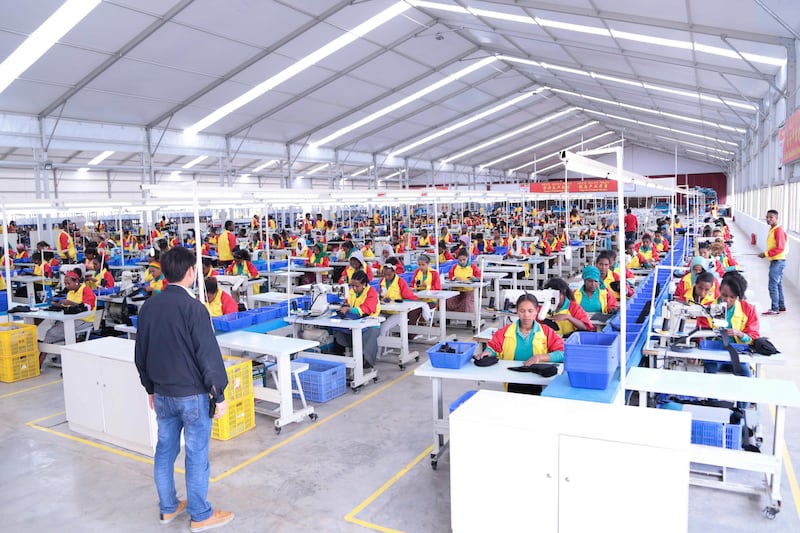
AGOA’s importance to Africa’s fashion manufacturing sector is evident in the fallout seen in countries whose eligibility was terminated by the US years before the overall scheme expired in September. Ethiopia’s benefits were revoked in 2022 over alleged human rights violations during an armed conflict.
ADVERTISEMENT
“PVH were one of the biggest buyers in Ethiopia using AGOA. They are not here anymore, they closed up and left,” says Mahlet Teklemariam, founder of Addis Ababa-based The Hub of Africa Fashion Week, referring to PVH Corp., the American conglomerate that owns brands including Calvin Klein and Tommy Hilfiger.
AGOA’s termination hit smaller exporters the hardest. Duties rose on leather goods at Semhal Guesh’s factory Kabana, triggering a decline in orders. She cut prices in an effort to protect jobs, but it wasn’t enough. “Small buyers we had [in the US] discontinued [orders] immediately because they did not have the AGOA advantage,” Guesh recalls.
Guesh describes being pushed from advance payment toward a credit system with US clients, moving from 30 to 90 days credit and worsening working-capital stress. Precarity turned to crisis for Kabana when a US client filed Chapter 11 after receiving a shipment. “They gave us no advance notice, but after a $90,000 shipment they received [from us] they filed for bankruptcy. The company owes us around $165,000.”
The picture differs in Rwanda, where AGOA apparel benefits were suspended in 2018.
“Rwanda and a few other countries wanted to ban imports of secondhand garments, which is a huge problem on the African continent. The US threatened to revise the terms of AGOA access if they followed through,” explains Sunny Dolat, a partner at Kenyan investment firm Heva Fund, noting that, as a result of Rwanda holding firm, the US withdrew the country’s third-country fabric provision. “Trade agreements are very frequently weaponised.”
At Rwanda-based fashion brand Asantii, which launched in 2022, founder Maryse Mbonyumutwa says “our volumes are still [too] low, to be [significantly] impacted by the [changes but] the US is one of our strategic growth markets and the outcome of AGOA is key [for the future].”
Mbonyumutwa is also founder and chief executive of Kigali-based manufacturer Pink Mango, which has a capacity of about 60,000 jackets a month. “We have specialised in outerwear for higher added-value production,” she says. “This is a strategic decision [to avoid] direct competition with Bangladesh, Cambodia and Pakistan.”
She notes a silver lining to last year’s tariff turmoil. Shifting tariff terms, combined with Western brands’ efforts to reduce China-dependency, have increased inbound interest from overseas investors and trading groups located in China and India looking for alternative factory capacity.
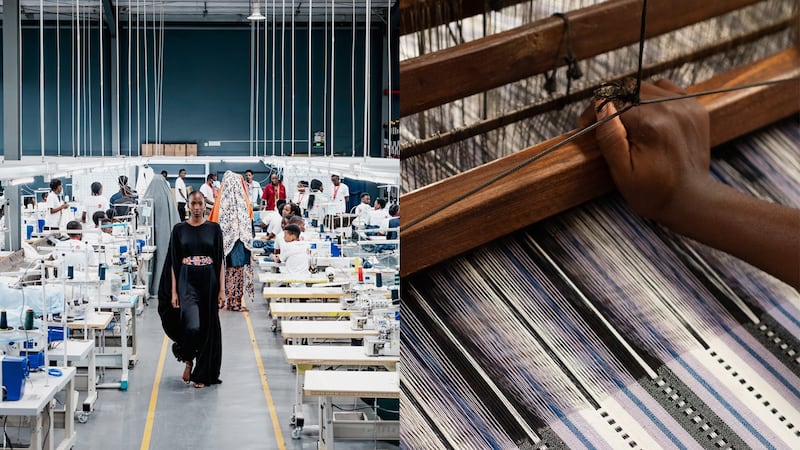
Uncertainty over AGOA is pushing some African manufacturers to pursue Europe as an alternative to the US, though the shift is far from straightforward.
“The American market is more volume driven; the European market is smaller quantities and more fashion and quality-driven,” states Mbonyumutwa, adding that switching markets demands different skills and standards.
European diversification often brings with it smaller order sizes, higher product complexity, and more stringent traceability and sustainability demands, as well as shorter lead times. While this is good for some factories, it’s impossible for others built for big US ‘basic’ apparel programmes.
Guesh says the post‑AGOA reality forced her to accelerate Europe-facing moves. But opening a showroom in Germany and attending trade fairs in Italy were steps that required budgets, time and relationships she says many SMEs don’t have.
Mbonumutwa and others believe the African Continental Free Trade Area (AfCFTA) deal is a promising opportunity to ease reliance on exports beyond the region. In practice, though, since ratification in 2021, implementation remains uneven and only a subset of countries are actively trading under it, with major obstacles including infrastructure gaps, border delays, and bureaucracy slowing it down.
New manufacturing bets in West Africa — such as Arise IIP’s construction of industrial parks housing textile mills and garment factories in Benin and Nigeria — aim to build vertical cotton-to-garment capacity, but they are long-term plays that won’t quickly relieve the strain in existing hubs.

A key facet of AGOA is the third-country fabric provision available to US-determined “less developed” nations, which include Lesotho, Kenya and Madagascar. The provision means that garments from those nations can qualify as duty-free, even if the fabric used is imported.
Hughes says that the provision “has been critical for apparel production on the continent” because much of Africa still lacks sufficient upstream textile capacity, “especially in synthetics.”
US International Trade Commission data from 2021 found that over 98 percent of AGOA apparel imports used the third‑country fabric provision. But dependence on the provision is a sector design fault of AGOA’s making, according to Maiden, Mbonyumutwa and Dolat.
“We have seen a tension that exists between the local textile and apparel ecosystem, versus EPZ (export processing zone) facilities,” says Dolat, who contends that EPZs are “set up to service an international client and remain extremely closed off to the local market and local designers, because all they’re seeking to service are international orders.”
Maiden questions whether the prevailing model of “mass-production for export from imported fabrics” is structurally “broken”, arguing that it incentivises low-value cut‑make‑trim operations delivering limited domestic tax benefits while still exposing workers to volatility. She likens Washington’s efforts to revive AGOA to “putting a plaster on a broken leg.”
Even if Washington reinstates AGOA, suppliers and brands will treat US access to Africa as unreliable and continue to diversify. As Mbonyumutwa puts it: “we really want to build an industry that will not be dependent on those trade agreements anymore.”
Cairo-based Afreximbank is funding projects across the continent, from textile and garment manufacturing facilities in Benin and Nigeria to export programmes for designer brands from Kenya, Ghana and beyond.
Maryse Mbonyumutwa of Pink Mango, Laduma Ngxokolo of MaXhosa Africa, and Reni Folawiyo of Alara join writer Rozan Ahmed at BoF CROSSROADS 2025 to discuss how African brands are overcoming operational challenges to bring global creativity and sustainability to fashion.
Brands and their suppliers have been forced to rapidly adjust to the new US duties, with the ripple effects set to continue into next year, according to the BoF-McKinsey State of Fashion 2026.
Brooke Roberts-Islam is a contributing writer for The Business of Fashion. She is based in London, England and is an author, public speaker and journalist with a focus on sustainability and technology.
Hubs like Nanjing and Changsha are drawing increased attention from brands such as Louis Vuitton and Burberry as middle-class consumers relocating from Beijing and Shanghai in search of higher quality of life take their appetite for luxury goods with them.
This week’s round-up of global markets fashion business news also features China’s plummeting footwear exports, Indonesian textiles and Chile’s department store giant.
This report, in partnership with Snap Inc. in MENA, explores how global and regional fashion and beauty brands can most authentically and effectively tap into the expansive, multicultural communities across the Gulf Cooperation Council.
Shoptalk launches its inaugural luxury retail event in the UAE capital, welcoming global and regional thought-leaders, executives and visionaries to the stage from January 27-29 at Abu Dhabi’s Emirates Palace Mandarin Oriental.
The embattled luxury department store is ‘absolutely dependent’ on companies like Chanel, LVMH and Kering, who could ‘suffocate’ the retailer if they stopped shipping, Reuters reported.
The polarising actress has become one of the most frequently tapped brand ambassadors in Hollywood. Whether she has the sway to build a lasting venture with her new lingerie line Syrn is still to be determined.
Fresh off a week of major moments, Tim Blanks and Imran Amed break down the blockbuster couture debuts at Dior and Chanel and what they signify about the state of the luxury industry.
Since the audit began in 2020, the Milanese fashion group found that more than a quarter of suppliers and subcontractors inspected had broken compliance rules.