
Agenda-setting intelligence, analysis and advice for the global fashion community.
Agenda-setting intelligence, analysis and advice for the global fashion community.
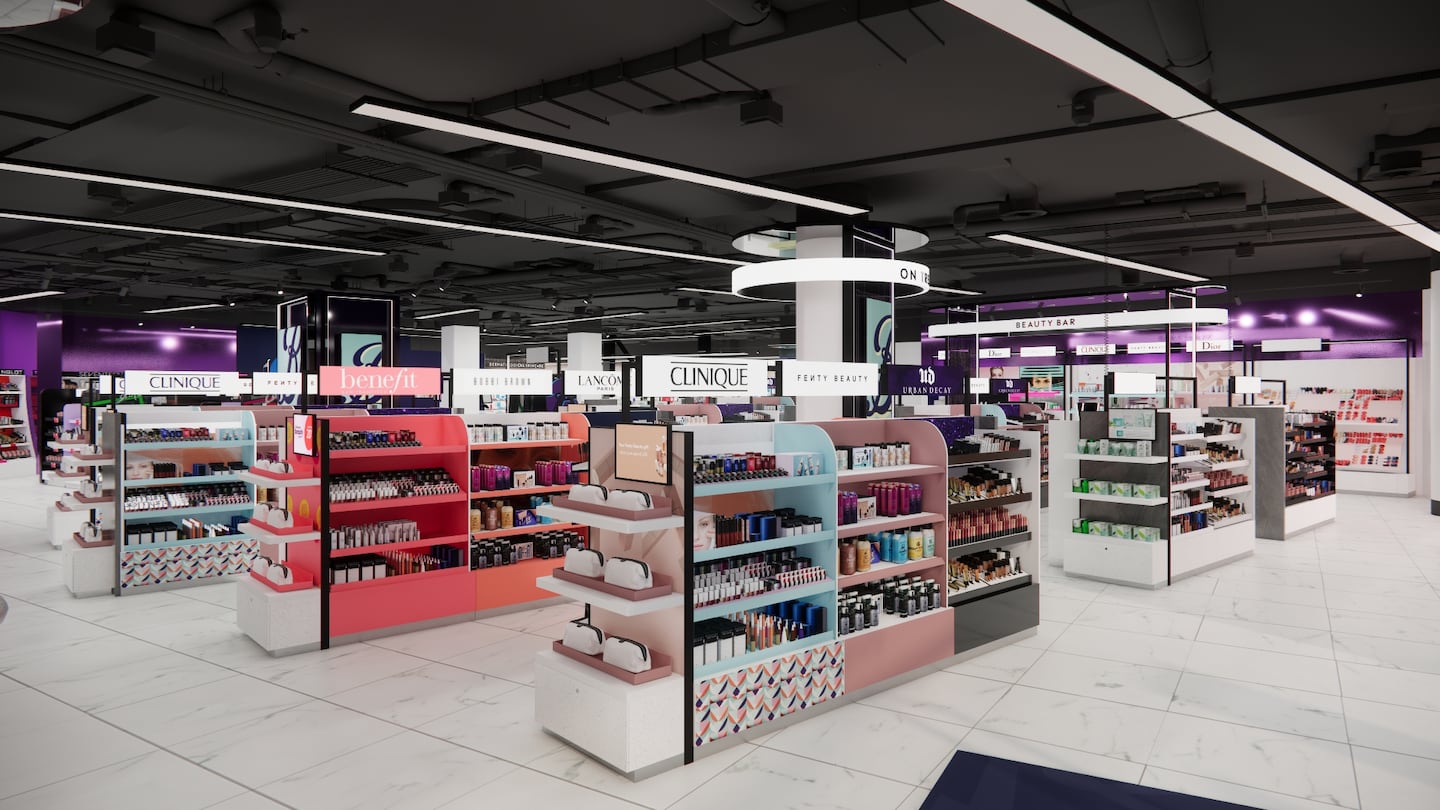
A K-shaped economy is a tale of two consumers: the highest earners prop up all discretionary spending, and the lower earners pull back. The US returned to this bifurcated model in 2025, according to the Bank of America Institute. That is, in all categories except for one: beauty.
“It’s a very different story, with the lower household incomes actually spending at almost exactly the same rate as everyone else,” said Larissa Jensen, senior vice president and beauty industry advisor at market research firm Circana. Per Circana data, premium and mass beauty are two of the five fastest growing industries in US retail. “Basically, all income cohorts are contributing an equal amount to that growth,” Jensen added.
Beauty’s reputation as a resilient category has been shored up over decades, or longer. In 2001, Leonard Lauder coined the “Lipstick Index,” a theory describing the uptick in sales of little luxuries during periods of downturn, as consumers seek a mood boost. But the last two years have tested its soundness, with key conglomerates such as Estée Lauder and Shiseido reported softening sales in mid-2025.
It’s a challenge that has been faced before: During the 2008 recession, Victoria’s Secret streamlined its operations by doubling down on fragrance, and more recently, even incumbent brands have felt the pressure to find new growth. MAC Cosmetics announced that from early 2026, its products would be available within Sephora for the first time — an announcement that beauty fans labelled a “recession indicator” across social media.
ADVERTISEMENT
Though the global economy has not entered a recession, economic pressures are putting intense pressure on lower-income households. Resultant patterns are emerging, such as trading down behaviour, the resilience of dupe culture and the re-emergence of K-beauty and the DIY channel. While price is a key factor, value plays out in other ways, with demand for entry-level “mini” size formats, scientific backing and constant innovation becoming increasingly de rigueur.
Failure to understand how economic pressures have altered consumer behaviour — making them pickier, less brand-loyal and laser-focused on value — leaves individual players at risk.
“As consumers make choices to cut back, we do see a lot of trade-down behaviours,” said Anna Mayo, vice president of consumer intelligence agency NielsenIQ’s beauty vertical.
Trade-down behaviour has become common for beauty shoppers. This is particularly within the skincare category, where innovation at lower price points coupled with consumers’ increased knowledge of formulas and ingredients means that switching to affordable brands feels less like a compromise.
“There’s this trend of consumers becoming really savvy, and knowing it’s not a black box,” said Manola Soler, managing director at consultancy firm Alvarez & Marsal. Brands that have convinced consumers their lower price point does not equate to lower efficacy have thrived, such as clinically backed The Ordinary and Byoma, along with ingredient-forward hair-care offerings such as L’Oréal’s Elvive and Pantene’s Pro-V.
K-beauty also has an edge. Korean skincare products, rooted in scientific research, are generally priced at mass-market range — popular products like Beauty of Joseon’s eye cream, Cosrx’s Snail Mucin Essence and Medicube’s Collagen Jelly Cream each sit below $20. Such a combination, in conjunction with their novelty to many shoppers, means that people “don’t feel like they’re trading down with K-beauty,” said Mayo.
Dupe culture also continues to thrive, particularly within the cosmetics category. “It’s less sticky as a category. Wherever people end up buying beauty, they become exposed to all these other brands and they’re willing to try them. It’s become a lot less taboo,” said Soler.
“Consumers want to indulge, but not everyone can indulge at the same rate,” said Jensen. “With dupes there is the ability to save, but still feel like you’re indulging.”
ADVERTISEMENT

Despite these individual successes, brand loyalty on a whole is down. Instead, value-conscious consumers are becoming more retailer-loyal. “Maybe I’m going to go buy fewer from the brands that I like, but I’m going to stay with the retailers that I trust for their curation, because hopefully I’m getting loyalty points as well, which also brings that element of value,” said Soler.
Brands in a retailer-loyal landscape must shore up their relationships with key stockists like Sephora and Ulta — or risk falling behind.
Increasing salon prices have created their own so-called indicators such as “recession hair,” the spike in popularity of lower-maintenance hair colours and styles as customers look to stretch out their salon appointments.
“We’d always believed that there was a strong bifurcation of people either visiting a salon or doing their own hair at home,” said Denise Paulonis, president and CEO at Sally Beauty. “When we actually surveyed customers that colour their hair, only 20 percent were salon-exclusive customers, and only 40 percent coloured their hair at home exclusively. The rest rely on a combination of both.”
To win this influx of at-homers, Sally’s is equipping them with both DIY products and the expertise to use them. In 2025, the retailer launched a “licensed colourist on demand” service where users can talk to a professional through all of the steps of dying their own hair at home. The service draws over 5,000 users each week, half of whom are new to the retailer. “They’re finding us because they want that source of confidence and expertise, and then we watch them be really sticky,” said Paulonis, adding these customers have about twice the lifetime value of an average customer.

Soaring manicure prices means the DIY nail category is also thriving. “The price and time it takes to go to a nail salon is just kind of out of reach for many people,” said Mayo. “Nail products have just gotten a lot better to do at home.” Press-on nails are surging in popularity, particularly among Gen Alpha. Olive & June, beloved for its press-ons, has also recently released an at-home builder gel as it hopes to poach BIAB and gel-nail shoppers along with those drawn to acrylics.
The at-home med spa experience is also having a moment, as beauty technology like LED devices, microcurrent tools and radio-frequency wands become increasingly widespread. In 2025, The Beauty Tech Group, owner of beauty gadget brands Currentbody Skin, Ziip Beauty and Tria Laser, estimated the global value of the beauty device market at £9–12 billion ($12–16 billion).
Entry-level models, like Ziip Beauty’s Dot or the Nuface wand, and topicals such as face masks and exfoliators look less like splurges and more like investments when they can help space out med spa visits.
ADVERTISEMENT
“I think that’s the beauty of the beauty industry,” said Jensen. “There’s a lot of levers to pull.”
Sign up to The Business of Beauty newsletter, your complimentary, must-read source for the day’s most important beauty and wellness news and analysis.
Want to dive deeper into an insight from this article? Check out The Brain of Fashion, BoF’s new generative AI tool where you can unlock BoF’s beauty archive with a single question.
After years of double-digit growth and a perception of being impervious to wider economic downturns, the beauty industry is finding that cash-strapped customers aren’t interested in “little luxuries.”
SharkNinja’s latest innovation, the Facialpro Glow, mimics in-office aesthetic treatments. Like competitors Omnilux or Medicube, its parent company hopes to entice consumers to take procedures into their own hands.
Guests like Addison Rae, Chloe Malle and Angel Reese talked getting ready for the demi-Met Gala — and the blush shades, drugstore hairsprays and makeup counters that got them there.

Rachael Griffiths is a Senior Editorial Associate at The Business of Beauty. She is based between St Helens and London, and covers beauty, wellness and industry news.
Brands are designing products and packaging meant to be clicked, tapped and touched. Actually using them is beside the point.
This week, I look at the very different roads traveled by Pat McGrath and Charlotte Tilbury, wait with bated breath for Pleasing’s comeback and review LVMH’s beauty results.
European shoppers are increasingly buying beauty online, but local merchants face stiff competition from newer giants like Amazon and TikTok Shop.
As discovery commerce reshapes the beauty industry, this playbook details how brands can leverage modern shopping behaviours, boost awareness and build cross-channel demand through TikTok Shop’s creator-led marketplace — with insights from Phlur, Medicube and POV Beauty’s Mikayla Nogueira.
The embattled luxury department store is ‘absolutely dependent’ on companies like Chanel, LVMH and Kering, who could ‘suffocate’ the retailer if they stopped shipping, Reuters reported.
The polarising actress has become one of the most frequently tapped brand ambassadors in Hollywood. Whether she has the sway to build a lasting venture with her new lingerie line Syrn is still to be determined.
Fresh off a week of major moments, Tim Blanks and Imran Amed break down the blockbuster couture debuts at Dior and Chanel and what they signify about the state of the luxury industry.
Since the audit began in 2020, the Milanese fashion group found that more than a quarter of suppliers and subcontractors inspected had broken compliance rules.


